














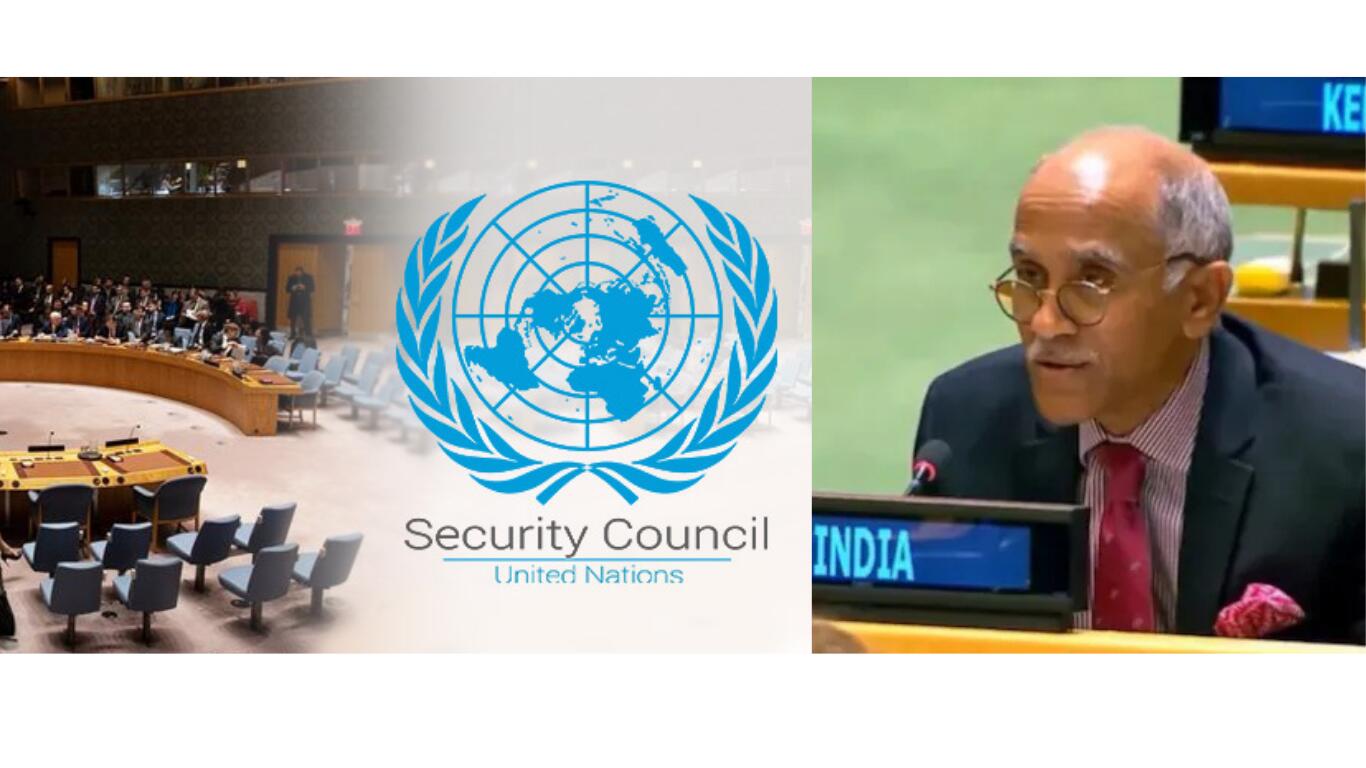
India’s Ambassador P Harish firmly justified Operation Sindoor a precision counter-terror mission launched in retaliation to the Pahalgam terror attack—as a focused and non-escalatory strike. The operation targeted terror training facilities in Pakistan-occupied Kashmir (PoK) and across the border in Pakistan, aiming to eliminate threats at their roots. Harish explained that the strike was in line with the Security Council’s April 25 resolution, which underscored the need for decisive action against states and groups sponsoring terrorism.
Harish remarked, “The nature of conflicts has transformed, with a proliferation of non-state actors, often propped up as proxies by state actors.” He added that terrorism today thrives on cross-border funding, arms trafficking, radicalisation, and digital communication platforms. India reminded the global community that it remains within its sovereign right to act against such elements when state-backed terror emanates from across its borders.
Pakistan’s Terror Ties and IMF Dependence Exposed
In a stinging rebuttal, Harish contrasted India’s global image with that of Pakistan. “On one hand there is India—a matured democracy, a rising economic power, and a pluralistic society. On the other is Pakistan—steeped in fanaticism and terrorism, and a serial borrower from the IMF,” he said. This direct comparison was aimed at exposing Islamabad’s attempts to mislead the global community while perpetuating dangerous ideologies at home.
He emphasised that Pakistan’s support for cross-border terrorism, coupled with its internal extremism and financial dependence on global institutions like the IMF, makes it ill-suited to lecture the world on peace or stability. Harish noted that as the world discusses “zero tolerance for terrorism,” Pakistan must introspect before sermonising, especially while hosting terror groups operating with impunity within its borders.
Ishaq Dar Tries to Revive Old Kashmir Narrative at UNSC
Presiding over the UNSC debate on “Promoting International Peace and Security through Multilateralism and Peaceful Settlement of Disputes,” Ishaq Dar used the occasion to repeat Pakistan’s tired rhetoric on Kashmir. He alleged that India’s abrogation of Article 370 and its decision to hold the Indus Waters Treaty in abeyance were unjustified and aggressive acts against Pakistan.
Specifically, Dar claimed that India was choking water supply to 240 million Pakistanis by holding the treaty “illegally and unilaterally” in abeyance. However, experts in India have clarified that the move to pause the treaty was a diplomatic signal following the brutal Pahalgam terror attack that claimed the lives of Indian civilians and was backed by Pakistan-based outfits. India’s suspension of the treaty has been framed not as aggression, but as a response to Islamabad’s failure to prevent terror elements from using its soil as a launchpad.
A Firm Rejection of Terror Diplomacy
India’s strong diplomatic stand at the UNSC reaffirms its zero-tolerance policy towards terrorism and its determination to confront false narratives at global forums. By defending Operation Sindoor and calling out Pakistan’s extremist credentials, India sent a clear message: terror and dialogue cannot coexist.
Ambassador Harish’s statements underscored the importance of action, not appeasement, in today’s global security landscape. Pakistan’s repeated attempts to use international platforms to whitewash its terror affiliations and provoke sentiment over Kashmir have increasingly failed to gain traction. India, on the other hand, continues to project itself as a responsible global power that will not hesitate to act decisively against threats to its sovereignty. As long as Pakistan remains in denial about its role in promoting terrorism, its calls for peace will ring hollow in the international community.