



















In a moment that could well define India’s modern space story, Group Captain Shubhanshu Shukla returned to Earth today, completing a two-week scientific mission aboard the International Space Station (ISS) as part of the Axiom Mission 4 (Ax-4). The SpaceX Dragon capsule, carrying Shukla and three other astronauts, made a smooth splashdown in the Pacific Ocean, just off the coast of San Diego, California, minutes ago.
With this, Shukla etched his name into history books as the first Indian astronaut to visit the ISS and only the second Indian ever to go to space following Rakesh Sharma, who flew aboard a Soviet mission in 1984.
A National Celebration
The pride across India was palpable. Not long after the splashdown, Prime Minister Narendra Modi posted a message on X (formerly Twitter), saying: ‘I join the nation in welcoming Group Captain Shubhanshu Shukla as he returns to Earth from his historic mission to Space. As India’s first astronaut to have visited the International Space Station, he has inspired a billion dreams through his dedication, courage and pioneering spirit. It marks another milestone towards our own Human Space Flight Mission – Gaganyaan.’
In many ways, the Ax-4 mission is more than a technical success. It’s a signal of India’s expanding role in the global space community, and a major step toward India’s longer-term plans to send humans deeper into space, including a future mission to the Moon.
A Journey Fueled by Collaboration and Purpose
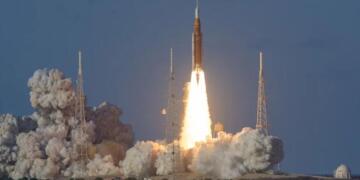
Launched from NASA’s Kennedy Space Center in Florida on June 25, the Ax-4 mission was a joint effort involving ISRO, NASA, SpaceX, and Axiom Space, the private aerospace company organizing commercial flights to the ISS.
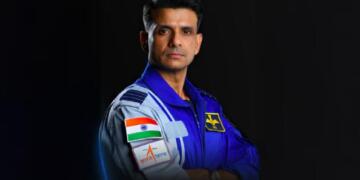
Shukla, a decorated pilot from the Indian Air Force and an ISRO astronaut, served as the mission’s pilot, flying alongside:
Peggy Whitson, veteran NASA astronaut and Axiom’s current director of human spaceflight
Slawosz Uznanski-Wisniewski of Poland (European Space Agency)
Tibor Kapu from Hungary’s space program (HUNOR)
Together, the four formed the first fully international private crew to reach the ISS.
The mission was part of India’s ₹33,000 crore ‘Mission Akash Ganga’, which includes plans to place Indians on the Moon by 2040. Ax-4 is viewed as a cornerstone of that broader vision.
Science in Orbit: Shukla’s Contributions
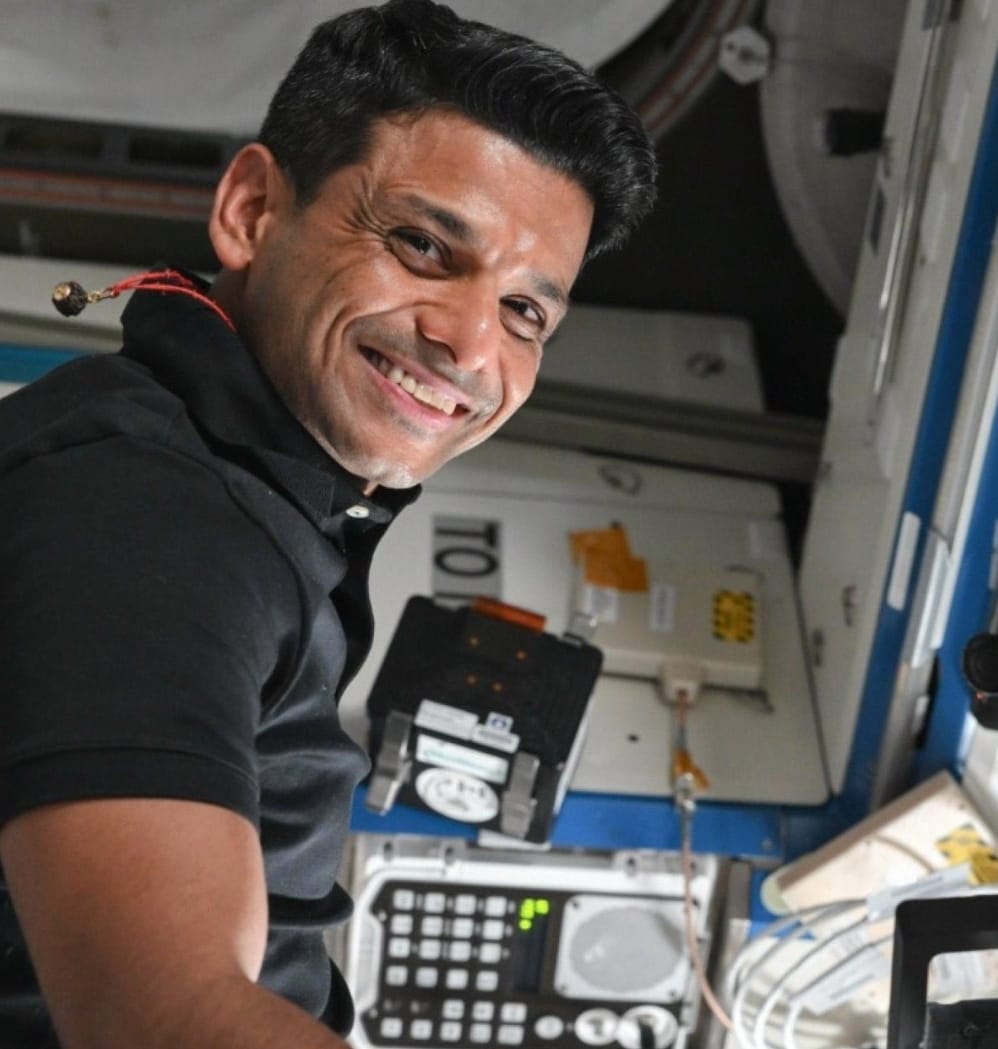
During their stay aboard the ISS, the crew was tasked with a wide range of scientific experiments spanning medicine, plant biology, sustainability, and mental health.
Shukla, in particular, led groundbreaking research on skeletal and muscle degradation in microgravity, a crucial area of study for long-duration missions. His findings will help scientists develop better countermeasures for astronauts traveling to the Moon or Mars, where extended weightlessness can weaken the human body.
One of his standout experiments involved the growth and centrifugation of cyanobacteria- microscopic, photosynthetic organisms better known as microalgae. These microorganisms were studied as potential sources of food, oxygen, and biofuel, with the goal of developing self-sustaining life support systems for space stations and interplanetary travel.
Shukla compared how different strains of cyanobacteria responded to microgravity, hoping to understand changes in cellular behavior, growth rates, and biochemical processes. His findings could help make long-term human settlement in space more feasible.
He also took part in mental health studies, along with his crewmates, assessing how astronauts cope psychologically during space missions, an area gaining more attention as humanity eyes longer stays beyond Earth.
Other Ax-4 experiments focused on cancer research, blood circulation, and plant growth in zero gravity, particularly with microgreens that could one day be grown on spacecraft or lunar habitats.
A Message From Orbit
On the eve of the mission’s return, Shukla gave a heartfelt farewell from aboard the ISS, speaking in both English and Hindi, and reflecting on the passage of time since Rakesh Sharma’s flight four decades ago.
’41 years ago, an Indian came to space and he told us how India looks from up above. Today’s India looks ambitious from space, today’s India looks fearless, today’s India looks confident, today’s India looks full of pride… today’s India still looks ‘saare jahan se acha.’’
‘Our journey ahead into space exploration may be long and arduous,’ he added, ‘but it has begun.’
A Strategic Milestone
Shukla’s mission is not only symbolic for India, it represents the deepening space partnership between India and the United States. The mission fulfills a long-standing commitment made during the Trump administration and reinforced by Prime Minister Modi to send an Indian astronaut to the ISS.
In a statement, NASA acknowledged the broader significance: ‘A collaboration between NASA and ISRO allowed Axiom Mission 4 to deliver on a commitment highlighted by President Trump and Indian Prime Minister Narendra Modi to send the first ISRO astronaut to the station.’
What Lies Ahead: Gaganyaan and Beyond
Shukla’s successful flight offers valuable insight and hands-on experience for ISRO’s Gaganyaan program- India’s upcoming mission to send its own astronauts to low-Earth orbit aboard an Indian-made spacecraft. The Gaganyaan launch, previously delayed, is now expected within the next couple of years.
Meanwhile, Shukla’s role is far from over. Upon return, he is likely to be deeply involved in astronaut training, mission planning, and outreach, helping nurture the next generation of Indian spacefarers.
Final Thoughts
Shubhanshu Shukla’s return marks more than the end of a mission. It is a homecoming that reignites India’s cosmic aspirations, a signal that the country is no longer just watching from the sidelines, it’s gearing up to lead.
From fighter jets to space capsules, Shukla’s journey captures the imagination of a new India: bold, curious, and ready for the next frontier.