








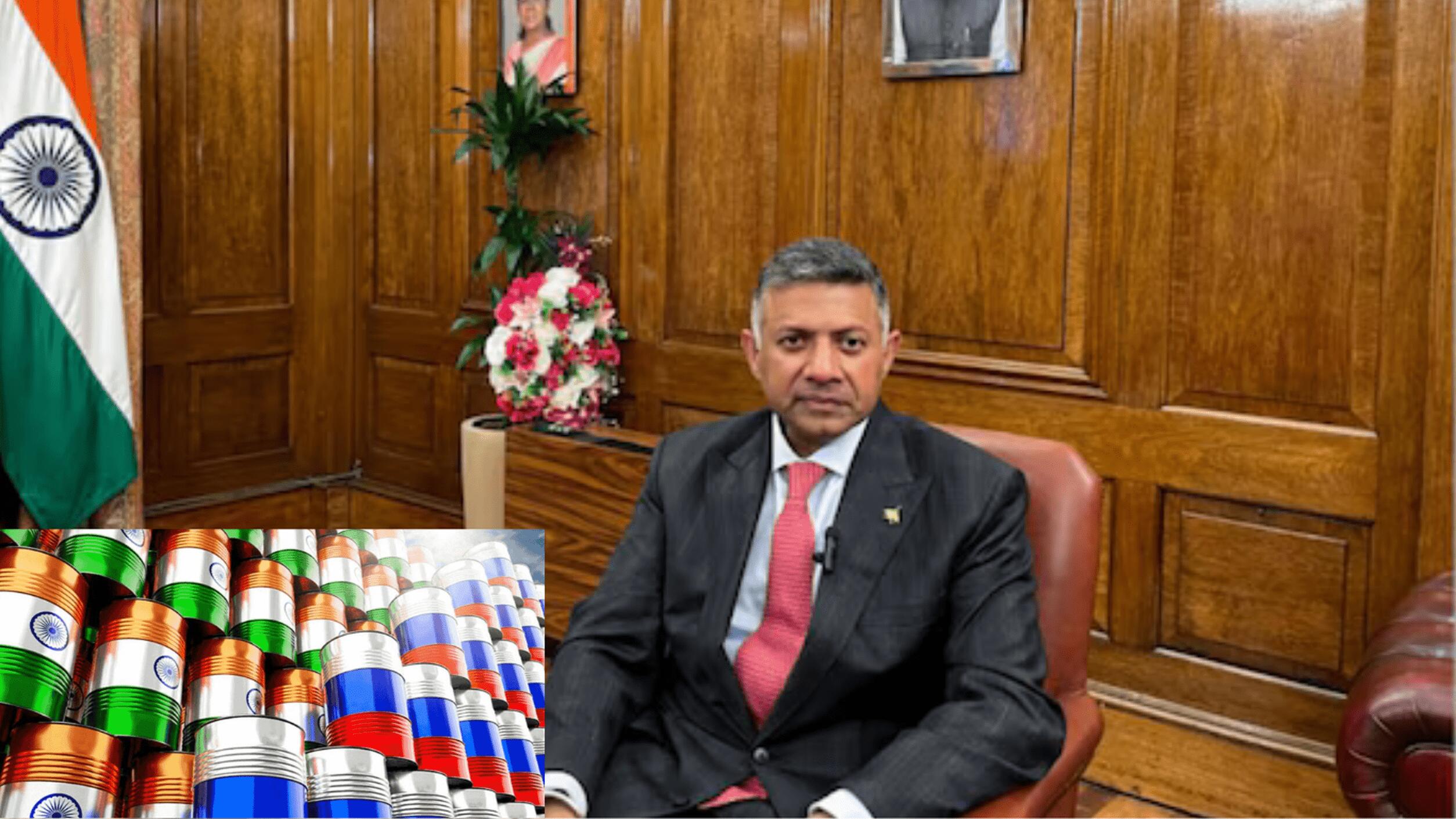
In a firm and unapologetic tone, Indian High Commissioner to the UK Vikram Doraiswami hit back at Western criticism over India’s continued oil imports from Russia. Speaking to Times Radio in the UK, Doraiswami made it clear that New Delhi’s decisions are rooted in economic necessity and fairness. “Should we switch off our economy?” he asked pointedly, exposing the hypocrisy of nations that criticize India’s oil policy while buying rare earths and energy from the very countries they expect India to avoid.
Asserting India’s sovereign right to make decisions that align with its national interests, Doraiswami emphasized that the West must understand India’s energy requirements, especially in a volatile global landscape where affordability and access are key. He also reminded critics that many of these same nations refused to help India in past decades but freely armed its adversaries.
India’s Firm Stand: National Interest First
India is the world’s third-largest energy consumer, importing over 80% of its energy needs. Doraiswami explained that due to increased global competition and sanctions placed on Russia, India was forced out of traditional markets. Russia stepped in with steep discounts, offering a practical alternative.
“We’ve been displaced out of the energy market largely, and the costs have gone up. What would you have us do? Switch off our economy?” he asked. Highlighting New Delhi’s historical reliance on Russia for defence and energy, he reminded the world of India’s past exclusion by Western powers.
NATO Threats Met With Strong Pushback
The Indian government also responded strongly to North Atlantic Treaty Organisation (NATO) chief Mark Rutte’s remarks suggesting secondary sanctions on nations like India for trading with Russia. MEA spokesperson Randhir Jaiswal warned against “double standards” and underscored that India’s primary responsibility is securing affordable energy for its population.
“Let me reiterate that securing the energy needs of our people is understandably an overriding priority for us,” Jaiswal said. He also called out the hypocrisy, noting that EU and NATO members continue to buy Russian energy, with countries like Turkey (a NATO member) and the EU bloc being among the top importers of Russian oil and gas.
Why India Buys Russian Oil
Union Petroleum Minister Hardeep Singh Puri, speaking in 2024, defended India’s position and said, “India did the entire world a favour by buying Russian oil because if we had not done so, the global oil prices would have skyrocketed to USD 200/barrel.”
India adhered to the global price cap and operated well within the framework of international regulations. He also called out “ill-informed commentators” trying to isolate India while conveniently ignoring similar or higher imports by European and Asian nations.
“We will continue to buy energy from whoever offers the best rates to our oil companies,” Puri affirmed. He emphasized that energy affordability, availability, and sustainability for 7 crore daily fuel users in India remains the top priority.
India’s Position on the Russia-Ukraine Conflict
While defending India’s energy policies, Doraiswami reiterated that Prime Minister Narendra Modi has been consistent in calling for peace. “This isn’t an era of war,” he stated, repeating Modi’s message to both Presidents Putin and Zelensky.
India has urged an end to the conflict in Ukraine and has expressed equal concern over violence and instability anywhere in the world. But national energy security, Doraiswami said, cannot be compromised in pursuit of global optics.
A Sovereign Energy Policy
India has drawn a red line: it will not be dictated to by powers who themselves operate with double standards. With clear messaging from both the MEA and India’s top diplomats, the country is asserting its right to secure energy for its citizens in the most efficient way possible.
The criticism rings hollow when the same countries that question India continue to engage with Russia themselves. As Hardeep Singh Puri had earlier said, “We are the only major consumer where fuel prices have gone down in the last three years despite unprecedented global price rises. India’s position is not just one of necessity but of moral clarity, economic prudence, and geopolitical independence.