
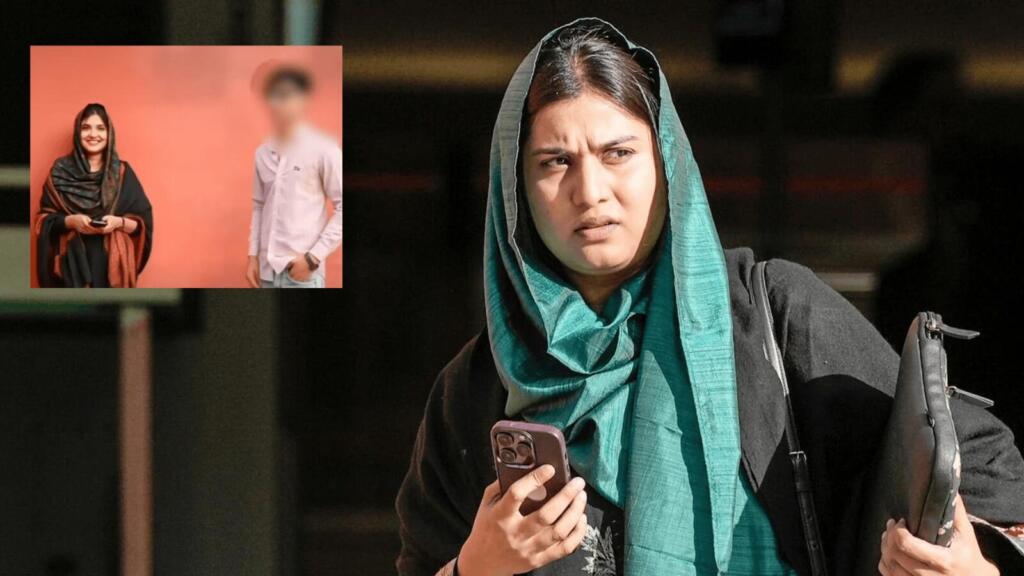
A disturbing incident from Nuh district in Haryana has reignited concerns around the misuse of artificial intelligence and the growing dangers of digital manipulation, especially when aimed at public figures. In a shocking case, two underage boys created a fake obscene video of a MP Iqra Munawwar Hasan using AI tools, purely to gain social media followers.
The boys, both minors and reportedly with little formal education, used artificial intelligence to fabricate a sexually explicit video featuring the Samajwadi Party MP from Kairana, Uttar Pradesh. The manipulated content showed the parliamentarian in a compromising situation with a man. The video was then uploaded from a fake Facebook account impersonating the MP.
It didn’t take long for the video to go viral, eventually reaching MP Iqra Hasan herself. Disturbed and appalled, she began to look into its origins and found that it had been created and shared from Nuh in Haryana.
Instead of reacting with anger alone, Hasan reached out to Congress’s local women’s wing leader, Razia Bano, who took immediate action. Accompanied by members of civil society, she visited Amka village late at night to get to the bottom of the matter. After a search, two boys were identified as the creators of the video. They reportedly admitted to creating not one but two doctored videos and uploading them from a fake account- all in pursuit of online clout.
A village meeting (panchayat) was called. When questioned in front of community elders, the boys admitted to the act with heads bowed. They were made to apologize publicly- touching their ears in a traditional sign of repentance, while some villagers, angered by the disgrace brought upon the community, physically reprimanded them. Their families also issued an apology, promising that such behavior would never be repeated.
“I am a daughter of the Mewat community,” said MP Iqra Hasan after learning about the incident. “This is not just an insult to me, but to the dignity of our entire society.” Initially, she indicated she would press for legal action. However, after hearing appeals from a local lawyer and civil society leaders, who emphasized the boys’ young age and lack of awareness, she chose to forgive them, calling for restraint and harmony.
But was forgiveness enough?
A complaint had already been filed by one of Hasan’s supporters, Imran Nadvi, on social media platform X. He also flagged the fake account that had uploaded the content. Following public attention and media reports, Uttar Pradesh DGP issued directives, and the cyber cell of Shamli Police was tasked with the investigation. SP Ramsevak Gautam confirmed that they were probing the origins of the fake account and the video, promising strict action once identities were confirmed.
Even so, questions are now being raised.
In a digital age where reputations can be destroyed within minutes, and where technology allows for near-perfect fakery, how do we protect individuals, especially women in public life from such attacks?
When two minors create an obscene, AI-generated video of an elected woman MP and upload it to the internet for attention, does a community apology suffice? In an era where digital crimes are spreading fast and becoming more harmful, should age alone shield someone from accountability; or is it time to set clearer legal and ethical boundaries, even for minors?
Many on social media have questioned whether the decision to forgive, though noble, sends the wrong message. Are village panchayats or social apologies enough to address crimes that involve digital impersonation, character defamation, and gender-based harm? Should such matters not rest solely in the hands of the legal system, and not be left to the moral judgment of individuals or local communities?
This incident forces us to confront uncomfortable truths about our society. It shows how young minds, with little understanding of consequence, are capable of weaponizing technology in the pursuit of virality. It also reveals the vulnerability of public figures, especially women in the face of synthetic media and manipulated narratives.
Above all, it raises the critical need for stronger digital literacy, stricter enforcement of cyber laws, and the creation of protective mechanisms for victims of such abuse- whether famous or not.
Because at the end of the day, this is not just about one MP or one video. It’s a mirror to a society where the lines between real and fake, accountability and forgiveness, legality and morality are becoming dangerously blurred.