
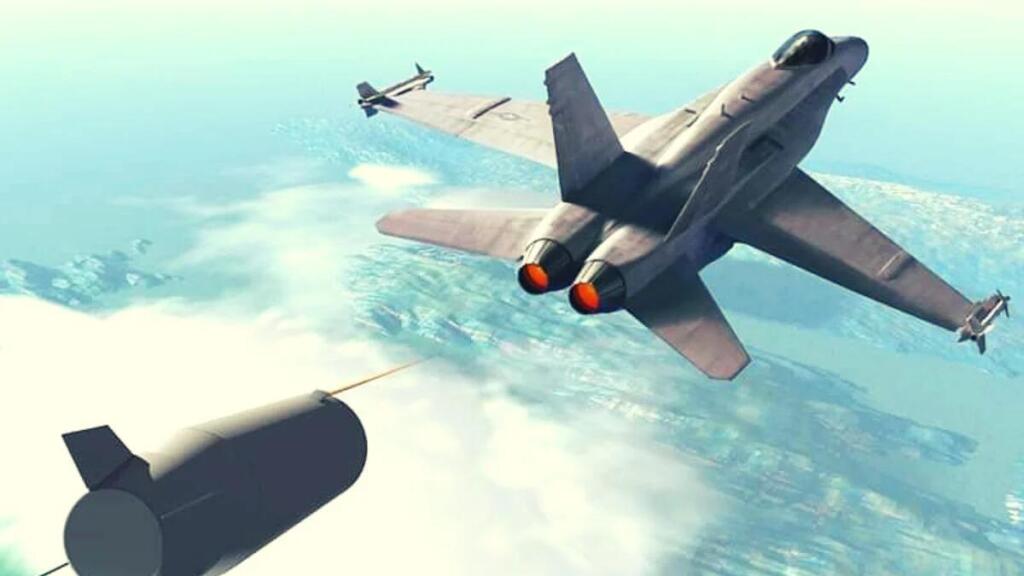
In a groundbreaking shift in modern air warfare, India has shown the world how artificial intelligence can decisively shape military outcomes. During “Operation Sindoor” in May 2025, the Indian Air Force (IAF) reportedly deployed an advanced AI-powered towed decoy system, the X-Guard, which played a pivotal role in neutralising Pakistani air threats. Developed by Rafael Advanced Defense Systems, this smart decoy transformed the battlefield, drawing enemy fire away from actual Rafale jets and confusing radar systems across the border. As a result, India was able to carry out targeted airstrikes deep into Pakistani airspace, causing extensive damage to terror hubs, airfields, and command centres, while avoiding any significant IAF losses. This operation is now seen as a landmark in electronic and psychological warfare.
AI Takes Flight: The X-Guard’s Role in Operation Sindoor
At the heart of Operation Sindoor was the Rafale’s cutting-edge X-Guard decoy system. This lightweight (30 kg) AI-driven device was trailed behind the aircraft using a 100-meter-long fibre-optic cable. It emitted a powerful 500-watt, 360-degree jamming signal that mimicked the radar signature and Doppler shift of an actual Rafale jet, effectively fooling enemy radars and air-to-air missiles.
The result? Pakistani PL-15E missiles and J-10C jets, equipped with Chinese-made KLJ-7A AESA radars, were misled into targeting these decoys instead of the real aircraft. Ryan Bodenheimer, a retired US Air Force F-15E and F-16 pilot, described the X-Guard as “the best spoofing and deception we’ve ever seen” and suggested that it may have “redefined the rules of electronic warfare.”
Decoy Wingman: Fast, Reusable, and Real-Time Aware
Unlike older decoy systems like the American AN/ALQ-50 or ADM-160 MALD, the X-Guard can be deployed in under two seconds and is fully reusable. Its real-time data feed via the fibre-optic link lets pilots monitor missile lock-ons and system status instantaneously a feature immune to jamming.
Acting like a “decoy wingman,” the X-Guard not only saved lives but also enhanced mission confidence. Some Pakistani claims of shooting down Rafales were later debunked, as evidence emerged they had only hit decoys, not real jets.
AI and Electronic Warfare: A New Era for the IAF
The significance of Operation Sindoor cannot be overstated. It underscored a turning point where artificial intelligence and electronic warfare began to dominate the skies. By deploying systems like X-Guard, India has demonstrated an ability to mask its fighter jets while launching pinpoint strikes with minimal risk.
Experts believe this form of non-contact warfare will define future battles. With China’s growing military presence and Pakistan’s consistent harbouring of terror groups, India’s investment in smart war technologies is seen as a strategic necessity rather than luxury.
X-Guard and Operation Sindoor Redefined Air Dominance
Operation Sindoor is now being hailed as the most technologically sophisticated aerial mission ever conducted by the Indian Air Force. The successful deployment of AI-driven tools like the X-Guard has not only safeguarded Indian pilots but delivered a hard blow to Pakistan’s terror infrastructure. As India prepares for future conflicts, its emphasis on electronic deception, rapid-response capability, and AI integration will ensure it remains a formidable force in the skies.
By exposing the vulnerabilities of traditional radar and missile systems, the IAF has turned the page on a new era of warfare—where invisibility, speed, and machine intelligence may matter more than brute firepower. The era of smart warfare has truly begun, and India is leading from the front.
India’s Precision Strikes: Massive Damage Inside Pakistan
With enemy radar thrown into chaos, the IAF was able to execute precise and deep incursions into Pakistani territory. Satellite imagery released after the operation confirmed large-scale destruction at several Pakistani airbases, ammunition depots, and terror launchpads in Pakistan-occupied Kashmir and interior Punjab.
Among the primary targets were:
- Murid Airbase: Hangars and runway infrastructure were decimated.
- Sargodha Airbase: Satellite data showed blackened blast zones consistent with heavy precision strikes.
- Muzaffarabad Terror Camps: Key jihadi training hubs suffered direct hits, confirmed via thermal satellite imaging.
Operation Sindoor reportedly neutralised up to 100 enemy combatants and eliminated several high-value targets linked to the Pulwama and Pahalgam attacks.