
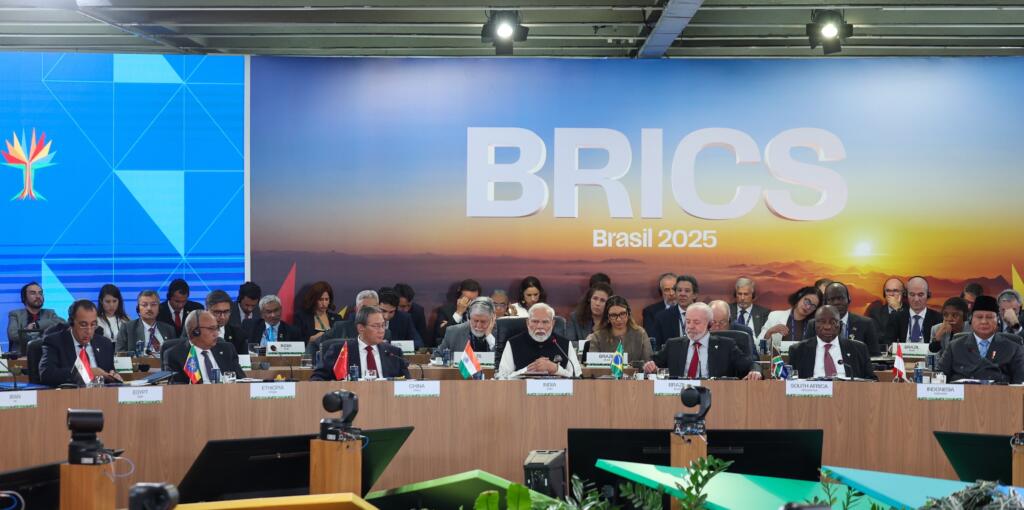
The 17th BRICS Summit, held in Rio de Janeiro, Brazil, witnessed an emphatic global stance against terrorism as the leaders of the bloc condemned the gruesome April 22 Pahalgam terror attack in Jammu and Kashmir, which claimed the lives of 26 innocent civilians. In the summit’s joint declaration, the BRICS nations expressed their solidarity with India, reaffirming their collective commitment to eliminate terrorism in all its forms and manifestations.
The BRICS declaration strongly denounced cross-border terrorism, terror financing, and safe havens for terrorists, urging all nations to adopt a zero-tolerance policy. This marks a significant diplomatic victory for India, especially in light of Pakistan’s continued harboring of terrorists and China’s earlier obstruction of UN sanctions against Pakistan-based jihadists.
Modi’s Call for Sanctions and Zero Tolerance
Prime Minister Narendra Modi, in his speech during the session on Peace and Security, did not mince words. He described the Pahalgam attack as a “direct assault on the soul, identity and dignity of India,” and emphasized that it was a strike against all of humanity. He thanked BRICS member states for their unequivocal condemnation of the attack and called for global unity in imposing strict sanctions on terrorists and their sponsors.
“Condemning terrorism should not be a matter of convenience, but a matter of principle,” he said, urging all nations to abandon double standards. PM Modi demanded accountability, stating that the world must no longer turn a blind eye to countries that shelter and support terrorist organizations for political gain. “There should be no difference between words and action when it comes to terrorism,” he declared.
Reforming Global Governance: Amplifying the Voice of the Global South
In the inaugural session on “Reform of Global Governance,” Prime Minister Modi underscored the urgent need to revamp global institutions such as the United Nations Security Council, IMF, and World Bank. He pointed out that these legacy systems, built in the 20th century, are failing to meet 21st-century challenges and exclude much of the Global South from meaningful representation.
“Without proper representation, these institutions are like mobile phones without network connectivity,” PM Modi quipped, stressing that credibility and effectiveness cannot be achieved without inclusiveness. He lauded BRICS’ recent expansion to include new countries from Asia, Africa, and Latin America and called for a similar approach in reforming the global decision-making framework.
The summit declaration echoed Modi’s appeal by endorsing comprehensive reforms of the UN Security Council and backing India and Brazil’s legitimate aspirations for permanent membership. The declaration called for a more democratic and representative Council capable of tackling global crises effectively.
India’s Role in Global Stability and Peace
PM Modi used the summit platform to reaffirm India’s stance on global peace and diplomacy. While calling for decisive action against terrorism, he also emphasized dialogue and diplomacy as the key to resolving conflicts. He cited crises across West Asia and Europe and reiterated India’s readiness to contribute to peace-building efforts globally.
The Prime Minister offered four key suggestions to enhance BRICS cooperation: demand-driven funding by the New Development Bank, the creation of a science and research repository for the Global South, resilient critical mineral supply chains, and responsible development of Artificial Intelligence that balances governance and innovation.
Addressing the AI challenge, PM Modi urged BRICS to take the lead in creating ethical, inclusive and forward-looking frameworks that could shape a responsible digital future.
Pahalgam Attack: A Blow to Humanity, Not Just India
The BRICS declaration, while avoiding direct references to Pakistan, clearly condemned the cross-border aspects of terrorism. The Pahalgam attack has become a diplomatic flashpoint, symbolizing the threat posed by transnational terror networks. PM Modi’s sharp rebuke of countries that provide “silent consent” to terrorism was an indirect but unmistakable message aimed at Pakistan.
The Rio declaration also pushed for the swift adoption of the long-pending Comprehensive Convention on International Terrorism under the UN framework and urged concerted actions against all designated terrorists and their enablers. This aligns with India’s long-standing demand to globalize counter-terror efforts and close the loopholes that allow terrorism to thrive.
A Resounding Global Mandate for Terror-Free Future
The BRICS Summit in Brazil has not only condemned the Pahalgam attack but also bolstered India’s narrative on the need for unwavering action against terrorism. The consensus among the world’s emerging powers sends a strong message that terrorism is an unacceptable threat to global peace.
India’s leadership at the summit reaffirmed its role as a key global stakeholder in the battle against extremism. PM Modi’s push for institutional reform, combined with his moral clarity on terrorism, set the tone for a new world order one that is inclusive, secure, and principled.
As India prepares to host the next BRICS Summit in 2026, the groundwork laid in Rio de Janeiro positions it not just as a victim of terror, but as a visionary leader shaping a collective global future free of fear, division, and violence.