


















Kerala is once again on high alert as the deadly Nipah virus resurfaces, sending shockwaves across the state. A 58-year-old man from Kumaramputhur in Palakkad tested positive for Nipah after his death, raising serious concerns about the virus silently circulating in the population. This posthumous confirmation has led to a response from health authorities, with six districts Palakkad, Malappuram, Kozhikode, Wayanad, Thrissur, and Kannur placed on high surveillance. The detection after death highlights the dangerous and elusive nature of the virus, reigniting fears of another outbreak in a state already familiar with its deadly impact.
Fresh Nipah Case in Palakkad Sparks Statewide Alarm
On the night of July 12, 2025, Kerala recorded its second Nipah virus death in recent weeks when a 58-year-old man from Kumaramputhur near Mannarkkad in Palakkad district succumbed to the infection. The patient had been admitted to a private hospital in Perinthalmanna, Malappuram, with a fever and other symptoms. His condition worsened rapidly, and after his passing, test results confirmed he was infected with the Nipah virus a revelation that set off a flurry of emergency action.
Samples from the patient were initially tested at Manjeri Medical College and later sent to the National Institute of Virology (NIV) in Pune for final confirmation. Kerala’s health machinery went into overdrive, launching contact tracing and field-level containment protocols.
Kerala Health Minister Veena George announced that a list of 46 primary contacts was prepared immediately, and a route map of the deceased’s movements was drawn up. CCTV footage and interviews with relatives were used to identify all possible points of contact. A family tree of the deceased was also created to ensure comprehensive tracing.
Six Districts Under High Alert Amid Fear of Spread
Following the confirmation of Nipah virus infection, the Kerala government has placed six districts Palakkad, Malappuram, Kozhikode, Wayanad, Thrissur, and Kannur on high alert. While the immediate focus is on Palakkad and Malappuram, health officials are taking no chances, expanding surveillance measures to surrounding regions.
So far, 543 people across Kerala have been placed under medical observation. Of these, 219 are in Palakkad, 208 in Malappuram, 114 in Kozhikode, and two in Ernakulam. Health officials are conducting fever surveillance and door-to-door awareness campaigns, especially in Kumaramputhur, the epicenter of the latest case.
Health Minister George has issued an advisory urging people to avoid unnecessary hospital visits and social gatherings in the affected districts. “We will bolster our fight against Nipah by strengthening the health teams and intensifying preventive measures,” she assured.
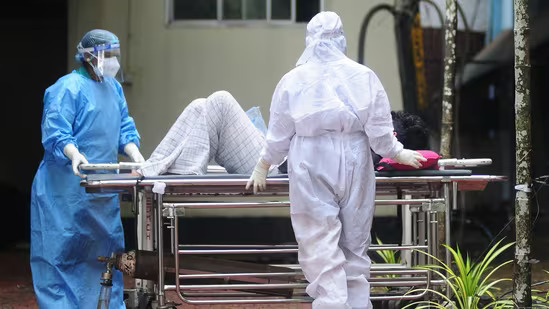
Mandatory mask usage has been implemented for patients, caregivers, and healthcare workers in affected areas. Hospitals have been asked to limit the number of attendees around patients, and citizens are being urged to report any fever symptoms immediately.
Kerala’s Troubled History with Nipah: A Recurring Nightmare
The fresh case in Palakkad has reminded the public and authorities alike of the deadly history of Nipah outbreaks in Kerala. Since 2018, the state has witnessed five major Nipah virus scares, each with its own toll of tragedy and fear.
In May 2018, the first recorded outbreak in Kerala claimed 17 lives, primarily in Kozhikode and Malappuram districts.
In 2019, a single case was detected in Ernakulam, which was successfully contained.
In 2021, a 12-year-old boy in Kozhikode died from the infection, prompting another round of mass alerts.
In July 2024, a 14-year-old boy in Pandikkad died of Nipah.
In September 2024, a 24-year-old man from Vandur succumbed to the virus.
And now, in July 2025, two deaths have already been confirmed an 18-year-old woman from Malappuram on July 1, and the 58-year-old man from Palakkad on July 12.
Each outbreak has reaffirmed the zoonotic threat posed by the Nipah virus, believed to be transmitted from fruit bats to humans, and then human-to-human through bodily fluids.
Now, Health workers are deployed across villages in Kumaramputhur, conducting household visits and distributing preventive instructions. Surveillance efforts are also being extended to the hospital where the man was admitted, as well as shops and public places he may have visited.
Mobile health units, rapid response teams, and fever clinics are operational in all six high-alert districts. Meanwhile, regional hospitals have been advised to isolate potential suspects immediately and report new fever cases to district control rooms.
The Southern State Braces Yet Again
The resurgence of the Nipah virus in Palakkad is a chilling reminder of how silently this deadly pathogen can creep back despite robust healthcare efforts. The fact that the latest case was confirmed only after death underlines the virus’s stealth and the importance of preemptive action.
With six districts now on alert and hundreds under observation, Kerala stands at another critical juncture. But armed with past experience and a proactive response mechanism, the state is better prepared today. The people of Kerala are being called upon to cooperate fully with health teams because in this fight against Nipah, every early step could mean a life saved.