
















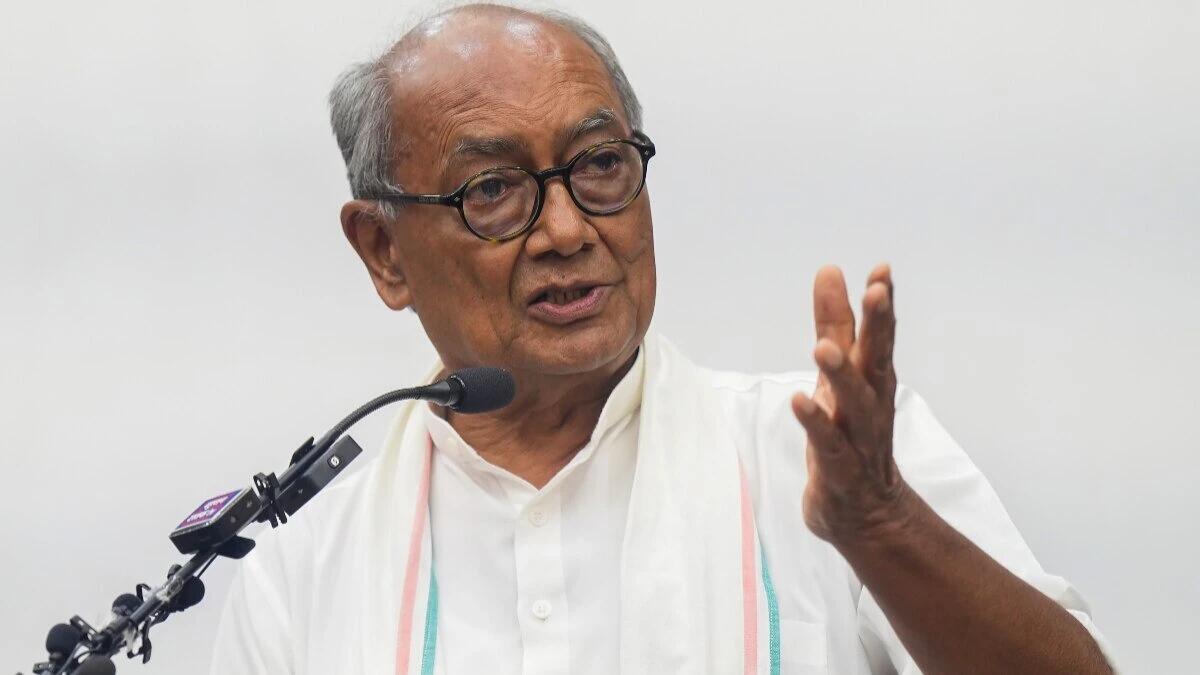
Senior Congress leader Digvijay Singh on Thursday said terrorism should not be associated with any religion, hours after a special NIA court acquitted all seven accused in the 2008 Malegaon blast case, citing lack of “cogent and reliable” evidence.
Digvijay Singh’s sudden embrace of religious harmony is not just ironic it’s insulting to the intelligence of the Indian public. For over a decade, he was the face of the “saffron terror” campaign, a narrative that vilified Hinduism and served the Congress party’s divisive political goals. Now, after a special NIA court has acquitted all accused in the Malegaon blast case, Singh wants to lecture the nation about peace and non-violence? This is not remorse it’s desperation. The Congress’s attempt to weaponize religion for votes has boomeranged spectacularly. The people haven’t forgotten and no flowery rhetoric can erase the years of targeted vilification.
The Malegaon Blast Case: A Decade and a Half of Controversy
On September 29, 2008, a powerful explosion ripped through Malegaon, a communally sensitive town in Maharashtra. The blast, which occurred near a mosque, killed six people and injured over 100. The case quickly became one of the most controversial terror investigations in India, drawing political, religious, and ideological divisions.
Fast forward to July 28, 2025, a special NIA court in Mumbai acquitted all seven accused, including Former BJP MP Pragya Singh Thakur and Lt Col Prasad Purohit, citing lack of “cogent and reliable” evidence. The court ruled that the prosecution failed to conclusively establish any direct involvement of the accused. The judgment noted procedural lapses, contradictory witness testimonies, and insufficient forensic linkage.
Digvijay Singh’s U-Turn: From ‘Saffron Terror’ to Religious Harmony
Shortly after the verdict, Senior Congress leader and Rajya Sabha MP Digvijay Singh made headlines with a statement. Speaking outside Parliament, he said, “Neither can a Hindu be a terrorist, nor a Muslim, Sikh or Christian. Every religion is an embodiment of love, goodwill, truth, and non-violence.”
This sentiment may have struck a chord had it not come from the same man widely accused of coining the term “saffron terror.” For years, Singh stood at the forefront of a political campaign that linked acts of terrorism to Hindu nationalist groups, leading to widespread criticism and alienation of a significant section of Indian society.
Now, in the face of the Malegaon acquittals, Singh appears to be backpedalling. He maintained that extremists were individuals who distorted religion for hate, but firmly denied that the Congress ever coined the term “Hindu terror.”
Political Fallout: Saffron Vindication and Congress Embarrassment
The BJP wasted no time in responding. Party leaders hailed the verdict as a vindication of their long-held belief that the Malegaon case was politically motivated and poorly investigated. Many pointed fingers directly at the Congress leadership, accusing it of maligning Hinduism for political gain.
Former BJP MP and one of the acquitted, Pragya Thakur, took the moral high ground, saying justice had prevailed. Social media users were quick to slam Digvijay Singh on X (formerly Twitter), stating: “After 15 years of defaming Hindus, now comes the lecture on religious peace? This sudden enlightenment doesn’t undo the damage.” Written an ‘X’ user
The post further said, “No Hindu, Muslim, Sikh or Christian is born a terrorist. True. But when politicians like Digvijay Singh label an entire community with terror tags, it fosters divisions, not peace.”
On the acquittal of all 7 accused in 2008 Malegaon blast case Another Congress leader Kamal Nath said, “The court has given its verdict in Malegaon, and it is appealable. And its appeal will be necessary”
Election Reverberations and the Sadhvi Factor
The Malegaon blast case also played a major role in Indian electoral politics. In 2019, Pragya Thakur contested and won the Bhopal Lok Sabha seat against Digvijay Singh by a margin of over 3.6 lakh votes. Pragya’s victory sent a clear message: the public did not accept the narrative that had painted her as an accused
The current verdict only strengthens that sentiment. With the court dismissing UAPA charges and throwing out key prosecution claims, including the link between the motorcycle used in the blast and Thakur, it underscores the lack of credible groundwork in a case that shook national conscience.
Who Bears the Responsibility?
The Malegaon trial has exposed how political narratives, when superimposed on national security cases, can derail justice, divide society, and stain reputations irreparably. Singh’s latest remarks, while seemingly noble, fall flat in the face of years of dog-whistle politics.
The Congress party, which once flirted with the term “Hindu terror” in public discourse, is now struggling to explain this U-turn. Many wonder whether the realization of electoral damage or the weight of judicial exoneration has finally dawned upon its leaders.
No Apology, No Accountability
Digvijay Singh’s post-verdict remarks read more like a deflection than a correction. If no religion can be associated with terrorism, then why did Singh and the Congress allow such narratives to flourish for years? The Malegaon acquittals may have legally cleared the accused, but the social and political wounds left behind demand more than just philosophical platitudes.
India deserves closure and that includes an honest reckoning by those who used faith as a political tool. Apologies are overdue, but without real accountability, the damage done will remain etched in the nation’s collective memory.