


















Nestled in Yadgir district of Karnataka, Talawargere is a village without a single Muslim resident. And yet, every year, its Hindu families observe Muharram, not out of formality, but with deep devotion. The origins trace back to 1925, when a deadly plague had gripped the region. As legend has it, a Sufi saint appeared in a villager’s dream, promising relief if he were honoured with a shrine. The plague subsided, and the promise became a tradition.
For nearly 100 years, residents have:
Maintained Ashurkhanas (shrines) built in memory of Islamic martyrs,
Organized Alai processions symbolising the grief of Karbala,
Sung devotional songs and distributed sweet prasad,
Invited neighbouring villagers to seek blessings and participate in rituals.
The celebration is devoid of spectacle or politics. There are no Muslims in the village, and yet, the memory of a shared past is enough to sustain the practice. Generations of Hindus have passed down this responsibility, not as an obligation, but as honour.
What makes people of Karnataka carry on a tradition not native to their religion? What keeps faith alive in the absence of its original custodians? And is this, perhaps, the kind of secularism India was always meant to embody- unspoken, uncelebrated, but lived?
Shivamogga: Desecration and a Difficult Silence
While Talawargere was quietly reaffirming a shared spiritual past, Shivamogga was confronting a very different moment.
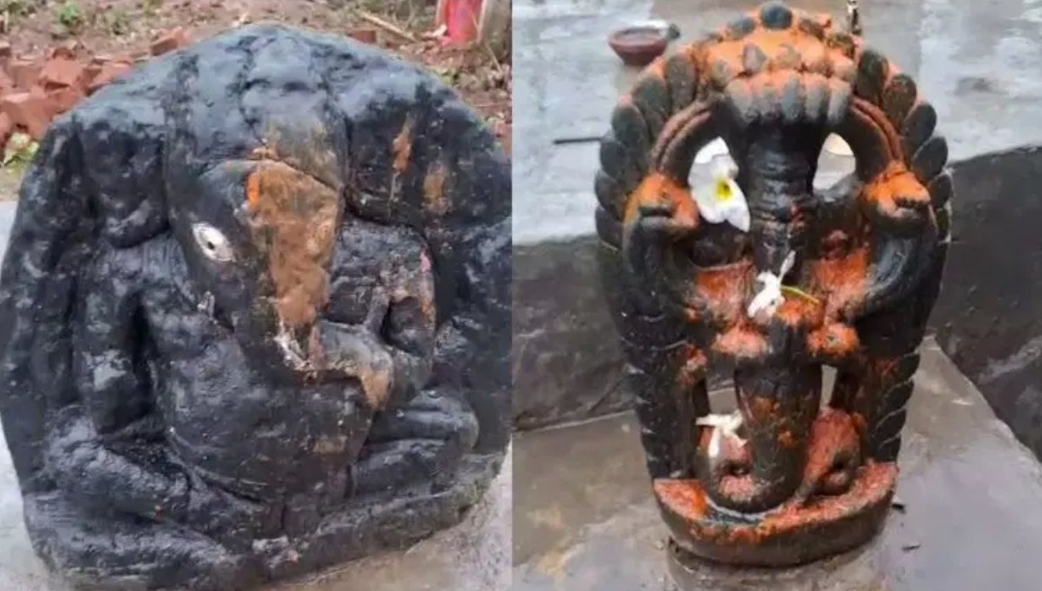
On July 3, in the Bangarappa Layout area of Ragigudda, a man named Syed was recorded on video stomping on a Ganesha idol and throwing a Naagara idol into a drain. These idols had been installed by local residents in a public park for peaceful worship. Syed’s justification, also caught on video, was chilling in its casual dismissal:
“Why should we wake up to a temple outside our house?”
The video triggered immediate backlash. He apologised later, but only after widespread outrage. The damage, symbolic and emotional, had already been done. Police detained Syed and his associate, Rehmatullah. Elected leaders visited the site and called for action. An investigation is ongoing.
But the questions remain: What compels someone to desecrate another community’s deity? What drives such public, performative contempt for someone else’s sacred space? And more critically, what kind of society are we building if these acts become more frequent or more quietly tolerated?
Two Realities, One State
Talawargere and Shivamogga exist within the same Karnataka. One is upholding a century-old promise to a saint from another religion. The other is witnessing the tearing down of another religion’s sacred iconography, in broad daylight, before a camera, and followed by a reluctant apology.
One place shows what mutual respect can preserve. The other shows how fragile that respect can be when tested.
It forces a series of uncomfortable reflections:
Who is keeping the spirit of interfaith harmony alive, and at what cost?
Are traditions of peace, like the one in Talawargere, the exception or the norm?
Is mutual respect still a shared goal, or has it become a one-sided performance?
And most importantly, what are we teaching the next generation about the boundaries between belief, freedom, and responsibility?
Karnataka’s two stories aren’t just regional footnotes. They are mirror images of the wider Indian condition, of what we remember, what we forget, and how we treat each other’s faith in the public square.
Perhaps it’s time for Karnataka to ask: What kind of secularism do we practice? What kind of coexistence do we really want? And who, in today’s India, is actually living it and who is only demanding it?
Until we can answer that, Talawargere and Shivamogga may remain two faces of the same uneasy truth.