
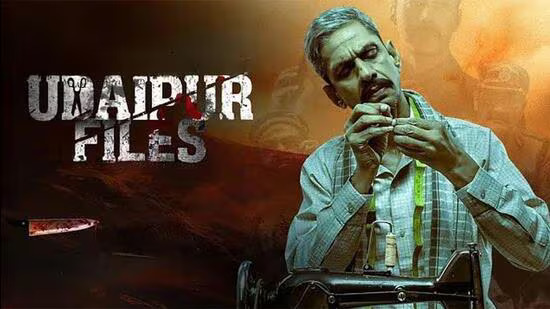
More than three years after the brutal daylight beheading of Udaipur tailor Kanhaiya Lal, justice remains elusive for his grieving family. The case, which sparked nationwide outrage and exposed chilling links to extremist ideology, has been crawling through the Indian judicial system with little tangible progress. Despite the swift intervention by the National Investigation Agency (NIA) and the severity of the crime, the legal machinery has examined barely a handful of witnesses out of a total 166. While court documents record just six witnesses, Kanhaiya Lal’s son Yash says the real figure is around 14-15. As the upcoming film The Udaipur Files reignites public attention, many are questioning why one of India’s most horrific communal crimes is yet to see justice.
A Cold-Blooded Killing with Terror Links
The gruesome incident occurred on June 28, 2022, in the heart of Udaipur’s old city. Kanhaiya Lal Teli, a humble tailor, was attacked in his shop by two men—Riyaz Attari and Ghaus Mohammad. The assailants filmed the savage murder and broadcast it online, claiming they were avenging a Facebook post where Kanhaiya Lal supported BJP’s then-spokesperson Nupur Sharma for her comments on Prophet Muhammad. Both killers had links to Pakistan-based radical groups, prompting the NIA to take over the investigation.
The murder wasn’t a mere act of personal vengeance it was a terror strike in the heart of India, designed to send a chilling message. Nine others were also arrested in connection with the crime, many of whom were part of an ideological network that allegedly incited the killers. The NIA filed a 1,000-page chargesheet invoking the Unlawful Activities Prevention Act (UAPA) and IPC 302 (murder). Yet, despite the comprehensive investigation, the trial has barely progressed in court.
Judicial Hurdles and Delays
So why has justice been so slow? Multiple systemic and procedural issues have plagued the case. The complexity of the matter 11 accused, massive digital evidence, and 166 witnesses meant the trial was bound to be lengthy. But the situation has been worsened by chronic delays in scheduling, judge transfers, and the lack of a dedicated NIA judge for months.
A judge’s transfer in 2023 led to a six-month pause in the hearings. Meanwhile, defense lawyers continue to request adjournments, further slowing down the proceedings. Former Rajasthan Chief Minister Ashok Gehlot criticized the delay, calling it an “insult” to the victim and his family. Ironically, the murder took place under his watch, and now under a BJP-led state government, the pace hasn’t improved significantly.
Victim’s Family Left Waiting in Pain
Kanhaiya Lal’s son Yash has been walking barefoot for three years as a symbol of protest. He vows not to wear footwear until his father gets justice. “Even now, only a small fraction of the witnesses have been examined. If this continues, we will never get justice,” Yash says. A minister once brought him slippers during a condolence visit but he refused to wear them.
Advocate Vikramaditya Ujjwal, representing the complainant, says the primary problem has been the non-availability of a dedicated NIA judge. “Out of 166 witnesses, those examined barely touched double digits. Adjournments by defense lawyers are another major hurdle,” he said. The recent appointment of Judge Pravendra Pal Singh to the NIA special court is expected to bring some continuity to the proceedings, but time is already lost.
Movie Controversy Renews Public Scrutiny
Amid the legal delays, the controversy surrounding The Udaipur Files, a film based on the murder, has thrust the case back into public discourse. After the Delhi High Court issued a stay on the film’s release, Vishwa Hindu Parishad (VHP) spokesperson Vinod Bansal questioned the legal system’s priorities: “The real case is pending for years, and a film faces a stay within days. What does this say about our justice system?”
The movie may not offer legal relief, but for Kanhaiya Lal’s family, even renewed public interest is a form of hope. “People have forgotten what happened. If the film reminds them, maybe pressure will build for the system to act,” said a family member.
A Long Road to Justice
Despite the national outrage, despite video proof, and despite the NIA’s detailed investigation, the case of Kanhaiya Lal’s murder is stuck in limbo. The slow crawl of justice has taken a toll on the victim’s family, who remain locked in a painful wait. With a new judge now in place and public interest possibly reviving thanks to the movie, there is a sliver of hope. But justice delayed is justice denied—and until accountability is delivered swiftly and fairly, India risks failing the very people its laws are meant to protect.