
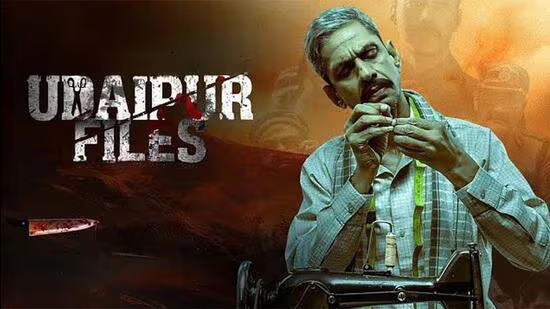
In a stunning move just a day before its scheduled release, the Delhi High Court has stayed the release of the film Udaipur Files: Kanhaiya Lal Tailor Murder. The decision has raised eyebrows across the country, as many now question whether the so-called “secular ecosystem” is afraid of the uncomfortable truth the film might expose. The movie, based on the real-life, brutal on-camera murder of tailor Kanhaiya Lal in Udaipur by radicalised assailants, seeks to shed light on the increasing threat of Islamic extremism in India. Yet, while the killers roam unpunished even after three years, the film meant to narrate that chilling truth has been halted within three days. Is this justice or suppression of facts?
What is Jamiat Ulema-i-Hind So Afraid Of?
The stay was ordered after two petitions one by the Islamist organisation Jamiat Ulema-i-Hind and another by journalist Prashant Tandon challenged the CBFC’s certification of the film. They argued that the film could incite communal tension. But the real question is: what are they afraid of?
Jamiat Ulema-i-Hind has a history of opposing anything that brings Islamic radicalism under public scrutiny. The group has also been linked to numerous efforts that indirectly shield those promoting religious extremism. By halting the film’s release, are they trying to prevent the Indian public from confronting a very real and dangerous threat?
Instead of condemning the brutal act committed in the name of religion, these organisations and individuals appear more concerned about suppressing any narrative that holds a mirror to the radicalisation problem. This raises further questions: Is public order more at risk from the film—or from the unpunished radicals who roam free?
Timeline of Events: Kanhaiya Lal Murder Case
June 28, 2022 – Kanhaiya Lal, a Hindu tailor in Udaipur, Rajasthan, is brutally murdered in his shop by Riyaz Attari and Ghaus Mohammad.
June 28, 2022 – An FIR is filed at Dhan Mandi Police Station, Udaipur, under relevant IPC sections including 302 (murder) and 295A (outraging religious feelings).
June 29, 2022 – Internet Suspended , To control tensions, the Rajasthan government suspends internet services across several districts.
June 30, 2022 – Case Transferred to NIA, Due to the terrorist nature of the crime, the case is handed over to the National Investigation Agency (NIA).
July 2022 – Nationwide Protests, Hindu organizations hold rallies demanding justice for Kanhaiya Lal.
August 2022 – NIA Charges and Investigations, NIA raids multiple locations in Rajasthan and other states.
December 2022 – NIA Files Chargesheet, NIA files a 5000+ page chargesheet before a special NIA court in Jaipur.
January 2023 – Case Goes to Trial, The NIA Special Court in Jaipur begins trial proceedings.
March 2025 – ‘Udaipur Files’ Announced Director Amit Jani announces a film titled ‘Udaipur Files: Kanhaiya Lal Tailor Murder’.
July 09, 2025 – Supreme Court turned down the request for an urgent hearing against release of Udaipur Files
July 10, 2025 – Screening for CBFC Lawyers, Kapil Sibal, appearing on behalf of petitioners, is shown a private screening of the film.
July 10, 2025 – Delhi High Court Stay – The Delhi High Court imposes an interim stay on the release of ‘Udaipur Files’.
July 10 2025 – Filmmaker Amit Jani announces move to the Supreme Court against the Delhi HC stay.
July 11, 2025 – Actual / Scheduled date of the film release
Kapil Sibal: Repeatedly Appearing Against Hindu Interests?
It’s not the first time that senior lawyer Kapil Sibal, who once held top posts in the Congress party, has appeared in cases that seem to be consistently against Hindu sentiment. From opposing the Ram Mandir to now backing a petition that stifles the release of a film exposing Islamic extremism, Sibal’s pattern is becoming difficult to ignore.
Sibal, according to the filmmaker, watched the movie before challenging its release. Yet, he chose to go forward with the petition, reportedly due to professional obligations. But many question whether this is a mere coincidence or part of a larger ideological alignment that routinely undercuts Hindu causes in the name of secularism.
What Happens Next? SC Battle Looms
With the High Court stay in place, the ball is now in the Central Government’s court. The Centre has seven days to review the revision application filed under the Cinematograph Act, 1952. Until then, the release of Udaipur Files remains suspended. Meanwhile, producer Amit Jani is preparing to take the battle to the Supreme Court.
Jani pointed out the irony: “It’s been three years since the murder, yet there is no justice. But a film that dares to show this pain is shut down within three days.”
Adding to the public outcry, Kanhaiya Lal’s son, Yash Sahu, also condemned the stay. “Despite having video evidence, the criminals have not been punished. But when someone wants to show the truth to the country, the film is stayed immediately. What justice is this?”
The Brutal Murder That Shook India
Kanhaiya Lal, a humble tailor in Udaipur, Rajasthan, was mercilessly murdered in broad daylight in 2022. His only “crime” was expressing support for former BJP spokesperson Nupur Sharma through a social media post. What followed was not just a murder—it was a public execution meant to instill fear. Two radicalised individuals filmed themselves beheading Lal and circulated the video widely to send a gruesome message. The horror of this act shook the conscience of the nation.
Despite overwhelming video evidence and national outrage, no final verdict has been delivered in the case. Meanwhile, efforts to depict the truth of the incident through cinema are being swiftly throttled. Filmmaker Amit Jani, who produced Udaipur Files, expressed frustration and said the film had already been screened for lawyer Kapil Sibal. “Even after watching the film, he opposed it only because he was paid to,” Jani remarked, adding that he would now approach the Supreme Court to challenge the stay.
Selective Outrage and the Death of Free Expression?
The suppression of Udaipur Files is not just about one film. It reflects a broader pattern where selective outrage dominates public discourse. While radical elements get away with violence, those who try to expose it are branded as instigators. The judiciary, institutions, and sections of the media seem more concerned about hurting sentiments than delivering truth. This double standard is dangerous.
If we, as a democracy, allow the murderers to walk free while gagging those who attempt to narrate their crimes, then we must ask: whose side are we really on? This is not just about cinema. It’s about confronting the truth, however uncomfortable it may be.
The question remains: Will the Supreme Court uphold the truth, or will it too buckle under the pressure of appeasement?