
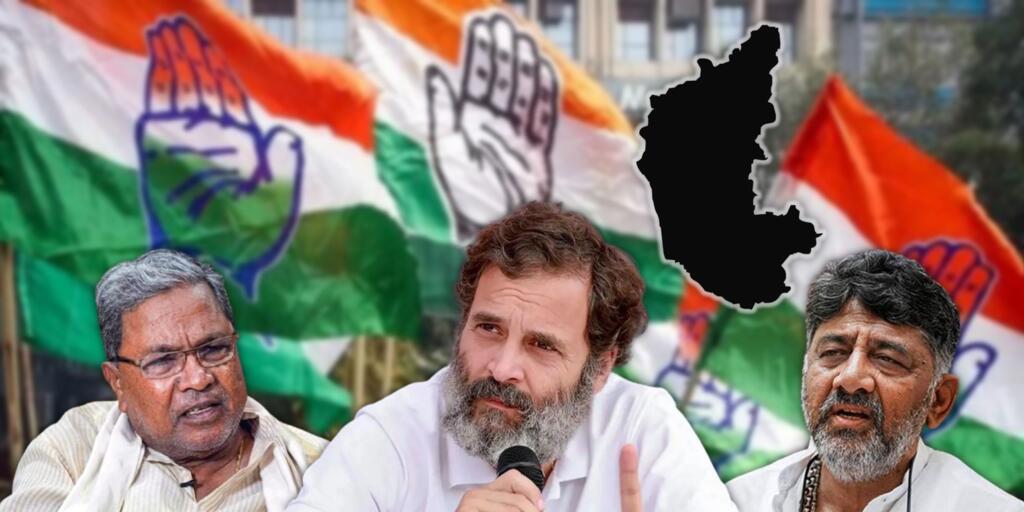
The Congress party has once again chosen communal appeasement over constitutional integrity with its latest maneuver, the so-called Rohith Vemula Bill, a politically charged legislation claiming to curb discrimination in higher education. The bill is not just a poorly-timed gimmick but a dangerous example of how identity politics is being weaponized ahead of the 2028 elections. Under the guise of social justice, the party has tabled a bill that opens the doors of Scheduled Caste reservations to Muslims, a move that can be termed as nothing short of a “backdoor entry” into a system meant exclusively to uplift Hindu Dalits.
Betraying the Constitution and the Dalit Cause
The Constitution (Scheduled Castes) Order of 1950 clearly restricts SC status to Hindus, later extended to Sikhs and Buddhists—religions rooted in the caste system. The rationale was clear: these groups were victims of a uniquely Hindu social hierarchy. Islam and Christianity, by their own theological claims, do not recognize caste. Yet, Congress has now twisted this logic to suggest that caste discrimination persists even after conversion and therefore Dalit Muslims and Christians should be eligible for SC privileges.
This is not social reform. This is political opportunism.
With the proposed Karnataka Rohith Vemula (Prevention of Exclusion or Injustice)(Right to Education and Dignity) Bill, 2025 , Congress is rewriting the rules to reward a vote bank at the expense of genuine Dalit communities. Hindu Dalits, who continue to face discrimination and compete for limited reservation opportunities, now face yet another hurdle, this time from a party that once claimed to champion their rights.
Divide and Rule 2.0
This is not a one-off policy tweak. It is part of a broader pattern in Congress’s politics, dividing Hindus, fragmenting Dalits, and appeasing minorities, all to stitch together a cynical electoral coalition. The slogan might as well read: Divide the Hindus, unite the vote banks.
While Hindu SCs, OBCs, and other marginalized communities are embroiled in constant internal competition over limited opportunities, Congress is attempting to dilute their claims by arbitrarily expanding the beneficiary base to groups with no constitutional right to SC status.
Ironically, while Hindu society struggles to reconcile its past and present, Congress is aiding those who’ve explicitly chosen to leave the Hindu fold, but still want to retain the benefits of its internal reform mechanisms.
Rohith Vemula’s Name, Political Exploitation
To make matters worse, the party has shamelessly branded this bill with the name of Rohith Vemula, a student whose suicide in 2016 became a rallying cry for anti-establishment forces. Yet, Vemula’s own caste status was contested, and his death, used repeatedly by Congress and the Left, has become a convenient emotional weapon for policies that serve no one but the Congress’s own political survival. Vemula’s caste status was never conclusively proven; in fact, the Gachibowli police’s closure report from March 2024 clearly stated that his Scheduled Caste certificate was not legally valid, and there was no evidence of caste-based harassment that directly led to his suicide.
If Congress truly cared about Dalits, it would focus on education, job creation, and ending caste-based violence—not scrambling to offer constitutional privileges to those outside the Hindu framework.
Questions have also been raised on whether the Congress aims to provide reservations for Muslims. The implications of this act go far beyond one religious community. This is not progress. It’s quota anarchy.
Draconian Provisions, Political Misuse
The bill proposes severe penalties including non-bailable, cognizable offences for acts of “discrimination,” with jail terms of up to three years and fines reaching ₹1 lakh for repeat offenders. Institutions violating so-called “equality” principles may face total withdrawal of financial aid. On paper, this might sound progressive. But scratch the surface, and the law looks like an instrument of coercion.
Without clearly defined legal thresholds, what counts as “discrimination” could be left open to interpretation and political misuse. Academic dissent, ideological debate, or internal disciplinary actions could be falsely labelled as caste prejudice. The bill can easily become a weapon against institutions or individuals unwilling to toe the Congress narrative.
Selling Out the Constitution
At a time when India needs clarity, integrity, and bold reforms, Congress has chosen confusion, communalism, and vote-bank gimmickry. The Vemula Act is not about justice, it’s about elections. It’s not about empowerment, it’s about entitlement politics.
With this bill, Congress isn’t protecting Dalits. It’s using them, and sacrificing them, in a desperate attempt to regain lost ground.