
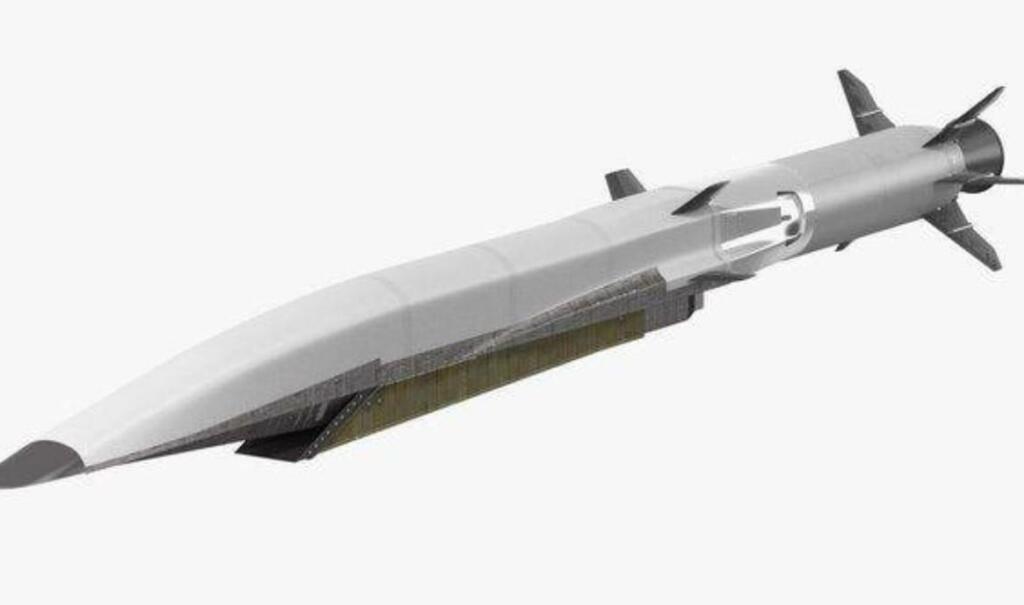
In a major stride toward bolstering national defense, India has reportedly tested next-generation hypersonic missile, the ET-LDHCM (Extended Trajectory– Long Duration Hypersonic Cruise Missile). Developed by the Defence Research and Development Organisation (DRDO), this cutting-edge weapon system represents a transformative leap in India’s strategic arsenal, with the capability to strike across the entirety of Pakistan and penetrate deep into key regions of China.
Designed under the top-secret Project Vishnu, the ET-LDHCM is a completely indigenous missile that significantly surpasses the speed and range of the current BrahMos missile. With an impressive strike range of 1,500 kilometers and a speed of 11,000 km/h (Mach 8), this missile represents a major leap in India’s hypersonic capabilities.
Unveiling the ET-LDHCM: Hypersonic Power at Its Peak
The ET-LDHCM stands out as one of the most advanced hypersonic cruise missiles in the world, incorporating cutting-edge design, propulsion, and maneuvering technologies. While the BrahMos operates at Mach 3 (approximately 3,675 km/h), the ET-LDHCM triples that speed, making interception by enemy air defense systems exceedingly difficult.
The missile is capable of carrying a payload between 1,000 to 2,000 kilograms, which may include either conventional or nuclear warheads. Its scramjet engine allows it to sustain hypersonic velocity by using atmospheric oxygen for combustion, eliminating the need for traditional compressors and enabling longer sustained high-speed flight.
Furthermore, the missile maintains low-altitude flight, allowing it to evade radar detection. It also features mid-flight maneuverability, giving it the ability to alter its trajectory during flight, another feature that complicates interception by hostile defense networks.
One of the missile’s engineering feats is its ability to withstand extreme temperatures of up to 2,000°C, a critical requirement for sustained hypersonic travel. ET-LDHCM is designed for multi-platform deployment, making it capable of being launched from land, sea, or air- providing immense strategic flexibility to the armed forces.
Geographical Coverage: Pakistan Almost Entirely Within Range
Given its 1,500 km range, ET-LDHCM can cover nearly 90–95% of Pakistani territory when launched from India’s western regions such as Gujarat or Jammu & Kashmir. Pakistan’s geographical length (approximately 1,600 km) and width (650–700 km) make nearly all key military and civilian centers including Islamabad, Karachi, Lahore, and Rawalpindi, vulnerable to strikes.
Only certain remote areas in western Balochistan may lie beyond its reach, underscoring the missile’s broad coverage and potential to neutralize strategic targets deep within Pakistan.
Targeting Strategic Regions in China
Although China is geographically vast, stretching over 5,200 km east to west and about 5,500 km north to south, the ET-LDHCM, when launched from India’s northern regions like Ladakh or Arunachal Pradesh, can strike key areas within a 1,500 km radius, covering around 25–30% of Chinese territory.
Critical border regions and sensitive military installations in Tibet and Xinjiang fall well within its range, making it a vital element in India’s strategy to counter Chinese assertiveness along the Line of Actual Control (LAC).
Strategic Significance
The induction of ET-LDHCM represents a crucial enhancement in India’s deterrence posture, particularly in the context of rising regional tensions. During Operation Sindoor, BrahMos demonstrated its effectiveness; ET-LDHCM, with its superior speed and range, is poised to be even more destructive.
In the evolving Indo-Pacific landscape, where China is expanding its influence, the ET-LDHCM provides India with a credible deterrence tool. The missile strengthens India’s position in high-altitude conflict zones and enhances its ability to strike deep into adversary territory in a preemptive or retaliatory scenario.
Global Impact
Currently, only the United States, Russia, and China possess operational hypersonic cruise missile capabilities. A successful test of ET-LDHCM would place India among this elite group, marking a significant milestone in its defense modernization journey.
Technological Milestones and Future Applications
The development of ET-LDHCM posed numerous technological challenges, particularly in the creation of heat-resistant materials and the scramjet propulsion system. However, DRDO recently completed a successful 1,000-second ground test, indicating substantial progress in overcoming these hurdles.
Looking ahead, this hypersonic technology holds potential beyond military applications. It could play a pivotal role in space launches, disaster relief operations, and in creating employment opportunities in private defense manufacturing sectors.
In summary, the ET-LDHCM is not just a missile, it’s a symbol of India’s arrival on the global stage of next-generation defense technology, signaling a new era of self-reliance and strategic supremacy in the region.