
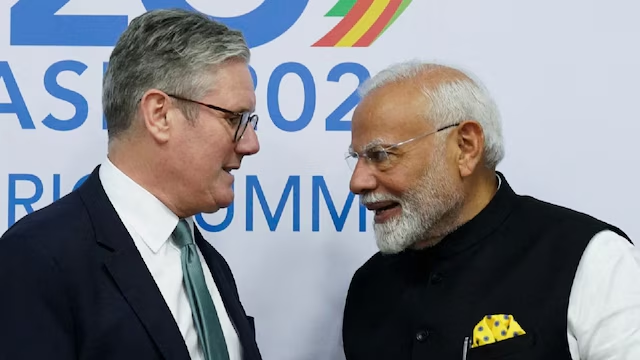
As Prime Minister Narendra Modi prepares to embark on a high-profile visit to the United Kingdom later this week, the Indian government has clearly outlined its diplomatic agenda. At the top of the list are two pressing concerns: the extradition of economic fugitives and addressing the growing influence of Khalistani extremist groups in the UK.
The visit, expected to include meetings with British Prime Minister Keir Starmer and other top officials, will also seek to revitalize bilateral cooperation across key sectors including trade, security, climate change, and defense.
High-Profile Fugitive Extraditions in Focus
One of the primary issues India will raise is the prolonged delay in the extradition of several economic offenders who have taken refuge in the United Kingdom. Individuals such as Vijay Mallya and Nirav Modi, accused in multi-billion rupee bank frauds, have been living in the UK for years while fighting extradition in British courts.
India is expected to press for legal and procedural cooperation to streamline the extradition process of such fugitives. Officials are likely to explore the possibility of enhanced mutual legal assistance agreements or frameworks that can help bypass delays and strengthen accountability.
India has long maintained that delays in returning fugitives undermine justice and could be misused to evade prosecution.
Curbing Khalistani Extremist Influence
A second key issue to be discussed is the alleged support and shelter being provided to Khalistani separatist elements operating out of the UK. India has raised concerns in recent years over increasing anti-India demonstrations outside its missions in London, vandalism incidents, and the spread of radical content via social media and community gatherings.
New Delhi views these groups as a serious threat to India’s internal security and territorial integrity. In previous communications, the Indian government has pointed out that several organizations linked to Sikh separatism continue to receive funding, logistical support, and public platforms in Britain.
In response, the UK has recently frozen multiple bank accounts tied to these networks and is said to be reviewing immigration records and the operational status of certain organizations.
During PM Modi’s visit, Indian officials are expected to request enhanced intelligence sharing, stricter scrutiny of radical outfits, and greater protection for Indian diplomats and missions.
Boosting Economic and Strategic Partnership
While security concerns dominate the agenda, the visit is also geared toward deepening the Indo-UK strategic partnership. Both countries are currently negotiating a Free Trade Agreement (FTA), which has seen multiple rounds of dialogue. Though progress has been slower than expected, the Modi visit is expected to inject fresh political momentum into the talks.
Key trade goals include:
Reducing tariffs on goods like textiles, automobiles, and whisky
Easing visa restrictions for Indian professionals
Facilitating technology transfer and innovation partnerships
Expanding access for Indian services firms in the UK market
In addition, the two sides are likely to discuss joint climate action, green energy investments, and defense cooperation, particularly in areas like aerospace, cyber defense, and maritime security.
Modi-Starmer Meeting: A Diplomatic Reset
This will be Prime Minister Modi’s first formal engagement with British PM Keir Starmer, who took office after a recent electoral victory. With a change in political leadership in London, India is looking to reset and refresh the momentum of bilateral relations that had slowed during recent years.
Sources suggest both leaders will focus on building a long-term strategic roadmap that not only tackles immediate challenges but also aligns on global issues such as Indo-Pacific security, counter-terrorism, climate financing, and multilateral cooperation at forums like the G20 and United Nations.
Diplomatic Significance
The Modi visit to the UK comes at a time when both countries are looking to recalibrate foreign policy in light of global geopolitical shifts. For India, the visit offers an opportunity to hold the UK accountable on sensitive issues, while also reinforcing shared democratic values and economic interdependence.
For the UK, India remains a key strategic partner in the Indo-Pacific and a major economic market as Britain continues its post-Brexit realignment.
Prime Minister Modi’s upcoming visit to the United Kingdom is poised to be both symbolically significant and strategically important. By placing the extradition of economic offenders and the threat of Khalistani extremism at the forefront of discussions, India is sending a clear message: diplomatic ties must be grounded in mutual respect, rule of law, and national security priorities.
At the same time, renewed engagement on trade, climate, and global cooperation signals both countries’ intent to elevate their partnership to a more ambitious and pragmatic level.