
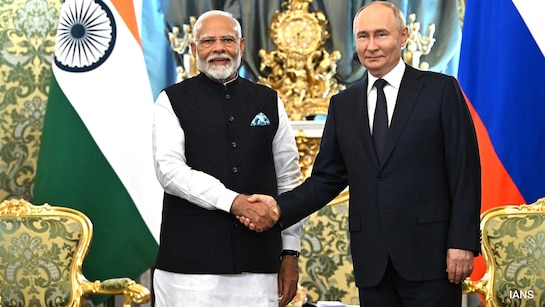
In a decisive step aimed at reinforcing its strategic independence, India has ramped up its defense partnership with Russia, moving forward with several major arms agreements. The move reflects New Delhi’s growing frustration over perceived setbacks in its defense relations with the United States, particularly during former U.S. President Donald Trump’s second-term campaign. Indian officials view Trump’s threats of sanctions against BRICS nations and his efforts to strengthen ties with Pakistan as part of a broader strategy to pressure Iran as undermining India’s regional and security interests.
India’s concerns began to mount in late 2024 when Trump, amid his renewed America First rhetoric, hinted at pulling back military cooperation with countries that refuse to toe Washington’s political line. This included veiled threats of sanctions and the possible rollback of defense technology transfers. The final straw was Trump’s support for a U.S.-Pakistan arms deal in early 2025, which many in India saw as a betrayal of mutual trust.
These moves have not been taken well by India. Furthermore, Washington has been pushing New Delhi to buy its F-35 jets; however, India has stood firm that it will not accept the jets without sharing technology and codes, something the US is not ready for. This has pivoted India towards its long-term partner, Russia, with whom it already shares deep military integrated bonds.
India’s Strategic Pivot to Moscow
In swift response, India revived several major defense procurements from Russia that had been stalled or slowed due to U.S. interference, notably the S-400 air defense missile systems, advanced R-37M air-to-air missiles, and upgraded Su-30MKI fighter jets.
1. S-400 Triumph Air Defense Systems
Despite facing the threat of CAATSA (Countering America’s Adversaries Through Sanctions Act), India has doubled down on its acquisition of the S-400 systems. With three units already delivered, two more are expected ahead of schedule in 2025. The S-400 is seen as a cornerstone of India’s layered air defense architecture, capable of targeting enemy aircraft and missiles at ranges up to 400 kilometers.
2. R-37M Hypersonic Missiles
India has also finalized a long-discussed deal to equip its Su-30MKI jets with Russian R-37M long-range air-to-air missiles. With a range exceeding 300 km and speeds nearing Mach 6, the R-37M is one of the most powerful weapons in its class — a significant boost for India’s deterrence capabilities in the Indo-Pacific region, particularly along its tense borders with China and Pakistan.
3. Su-30MKI Upgrade Program
Additionally, India and Russia have agreed on a comprehensive upgrade package for the Indian Air Force’s 260+ Su-30MKI fighters. The deal includes new radar systems, electronic warfare suites, and integration of BrahMos cruise missiles, turning the workhorse of the IAF into a more lethal multi-role platform.
India’s Message: “Strategic Autonomy Is Non-Negotiable”
These deals signal more than a procurement shift, they represent India’s assertive stance on defending its national interests regardless of global power alignments. Defense analysts say New Delhi is sending a clear message: India will not be bullied into abandoning critical capabilities by any superpower, even a longtime partner like the United States. It has long-standing deep ties with Russia that it always seeks to improve further.
India’s pivot is also expected to accelerate the development of indigenous weapons systems under the “Make in India” initiative, even as it continues to diversify its military partnerships, including with other nations. Washington, meanwhile, faces a crucial decision: either reassess its approach to India or risk pushing one of Asia’s most powerful democracies further into the orbit of strategic competitors.
As the geopolitical chessboard in Eurasia and the Indo-Pacific heats up, India’s actions speak louder than words. New Delhi is not prepared to be bogged down by Western pressures and is, in fact, furthering its relations with Moscow regardless of Western response. This should ring alarm bells in the West as their adverse moves may permanently drive away one of the most powerful countries, and they need to reassess their diplomatic tactics completely.