










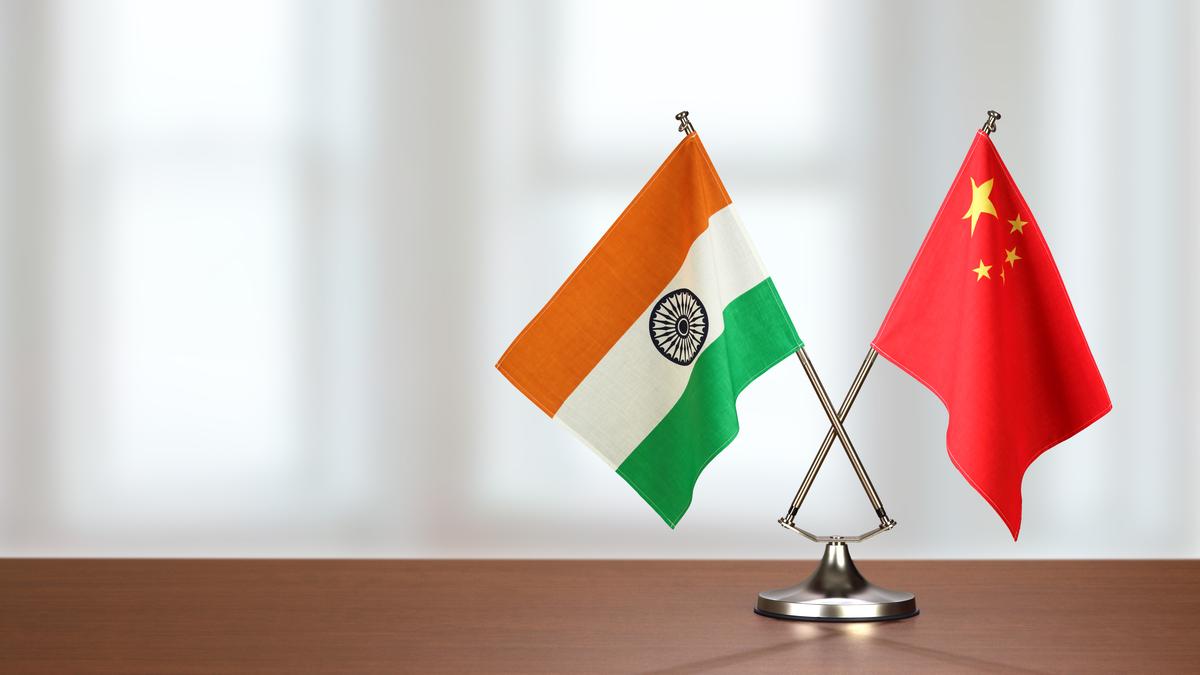
India and China have taken a significant step toward restoring bilateral ties, as both nations held the Working Mechanism for Consultation and Coordination (WMCC) meeting in New Delhi this week. The primary agenda: reviewing the status quo along the Line of Actual Control (LAC) in eastern Ladakh and laying the groundwork for the next round of Special Representatives’ (SR) dialogue on the long-pending boundary dispute. This comes nearly nine months after both sides completed disengagement from the last major friction points Demchok and Depsang following a military standoff that began in May 2020. Although frontline de-escalation remains pending, recent diplomatic engagements suggest a renewed commitment to stabilising the border and normalising relations.
WMCC Meeting: Focus on Stability and Dialogue
The WMCC meeting, held in Delhi, was attended by senior officials from both countries. The Indian delegation was led by Gourangalal Das, Joint Secretary (East Asia Division) in the Ministry of External Affairs (MEA), while the Chinese team was headed by Hong Liang, Director General of the Boundary and Oceanic Affairs Department of the Chinese Foreign Ministry. According to the MEA, both sides expressed satisfaction over the relative peace and tranquillity that currently prevails in the border areas. The statement said this environment has contributed to a gradual thaw in relations, and both sides agreed to maintain regular diplomatic and military communication through existing mechanisms.
As part of their deliberations, India and China reviewed the disengagement measures discussed during the 23rd round of the SR talks and reaffirmed their mutual commitment to effective border management. The MEA added that the WMCC discussions helped prepare the path for the next edition of the SR dialogue, which will be hosted in India later this year.
Ajit Doval and Wang Yi to Resume SR Talks
The upcoming SR dialogue will be led by India’s National Security Adviser (NSA) Ajit Doval and China’s Foreign Minister Wang Yi. Notably, Wang Yi is expected to visit India for these high-stakes talks. The last SR dialogue was held in December 2023 in Beijing and focused on confidence-building measures and conflict resolution frameworks. The MEA’s statement suggests that both nations are working toward consensus on boundary mechanisms that could defuse future tensions along the LAC.
This round of dialogue gains added importance as it follows External Affairs Minister Dr. S Jaishankar’s recent visit to China, where he attended a Shanghai Cooperation Organisation (SCO) foreign ministers’ conclave. The political signals from these consecutive meetings underscore a strategic intent to move beyond the legacy of the 2020 Galwan clash and usher in a new phase of engagement.
Military Disengagement Done, But De-escalation Pending
While both armies have disengaged from key flashpoints, including Pangong Tso, Gogra-Hot Springs, Demchok, and Depsang, they are yet to carry out complete de-escalation by pulling back the tens of thousands of troops stationed along the LAC. As it stands, around 50,000 to 60,000 soldiers from each side remain deployed in eastern Ladakh, a stark reminder of the unresolved tensions.
The face-off that began in 2020 had plunged India-China relations to a historic low, with the Galwan valley clash resulting in fatalities on both sides for the first time in decades. Since then, trust-building has remained fragile, but the October 2024 disengagement agreement and subsequent diplomatic interactions have set a cautious course for stability.
Modi-Xi Meeting Rekindled Dialogue Mechanisms
The push to reactivate dialogue frameworks such as the WMCC and SR talks gained momentum after Prime Minister Narendra Modi and Chinese President Xi Jinping met on the sidelines of the SCO summit in Kazan, Russia, in October 2024. Just days before this meeting, the disengagement agreement at Demchok and Depsang was finalised, setting the stage for renewed bilateral discussions.
Hong Liang, who led the Chinese delegation in Delhi, also met Foreign Secretary Vikram Misri during his visit signalling Beijing’s keenness to sustain engagement at multiple levels. This diplomatic activity, if sustained, could lead to more predictable relations between the two neighbours, though challenges remain, especially in the context of competing geopolitical interests and ongoing border infrastructure development.
A Fragile But Forward-Leaning Peace
While the border remains militarised and the trust deficit persists, the latest WMCC talks and preparations for the SR dialogue indicate that both India and China are willing to pursue a diplomatic roadmap for peace. The revival of structured talks after months of military and diplomatic quietude reflects a conscious move to reduce flashpoints. However, without concrete steps toward full de-escalation and clarity on the LAC’s contours, the peace remains precarious. The upcoming SR-level engagement could determine whether this tentative détente evolves into long-term stability or remains a fragile ceasefire in a strategic rivalry.