










India’s External Affairs Minister S. Jaishankar has publicly dismissed US President Donald Trump’s claims that he played a key role in ending a recent military standoff between India and Pakistan by using trade negotiations as leverage. In an exclusive conversation with Newsweek in New York, Jaishankar offered a detailed chronology of events, asserting that there was no link between trade discussions and military de-escalation, and that India’s actions were guided solely by national security interests.
Trump’s Claim: “I Ended It With Trade Threats”
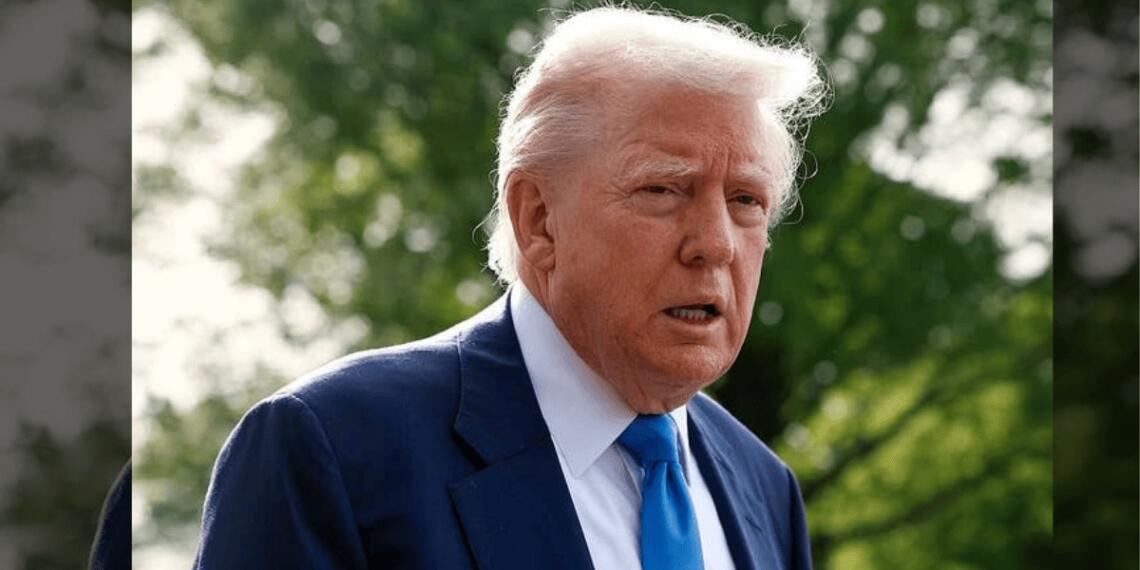
Last week in The Hague, President Trump said he had personally defused the India-Pakistan conflict “with a series of phone calls on trade.” According to him, both nations were warned that the United States would halt trade negotiations if the situation escalated. “I said, ‘If you’re going to fight each other, we’re not doing any trade deal,” Trump stated, implying that this threat pushed both sides to stand down.
Jaishankar’s Response: “I Was In The Room”
Jaishankar, however, challenged this narrative forcefully. “I can tell you that I was in the room when Vice President JD Vance spoke with Prime Minister Modi on May 9,” he said. “There was no mention of trade. The conversation focused entirely on the threat of a large-scale assault from Pakistan.”
According to the Minister, India had intelligence indicating that Pakistan was planning a significant offensive. That night, Pakistani forces launched a heavy assault, but Indian forces responded immediately and decisively.
India’s Timeline: Response, Diplomacy, and Ceasefire
The morning after the exchange, Jaishankar spoke with US Secretary of State Marco Rubio, who informed him that Pakistan was willing to talk. Later that same afternoon, Pakistan’s Director General of Military Operations (DGMO), Major General Kashif Abdullah, directly contacted his Indian counterpart, Lt. Gen. Rajiv Ghai, to request a ceasefire.
“There was no external mediation or conditionality attached to our response,” Jaishankar emphasized. “The decision-making was entirely sovereign and focused on countering terror threats.”
Operation Sindoor: India’s Response to Pahalgam Terror Attack
The recent escalation followed the April 22 terror attack in Pahalgam, Jammu and Kashmir, which Jaishankar described as “an act of economic warfare.” The attack, carried out by the Resistance Front- a Pakistan-backed group linked to Lashkar-e-Taiba, targeted civilians and tourists in a bid to cripple the region’s booming tourism sector.
“It was designed not just to kill, but to destroy livelihoods and provoke religious violence,” he said, revealing that victims were forced to reveal their faith before being executed. In response, India launched Operation Sindoor, targeting terror camps across the border.
Rejecting ‘Nuclear Blackmail’ and Asserting Sovereignty
Jaishankar underlined India’s broader policy shift in dealing with terrorism emanating from Pakistan. “The notion that nuclear threats from across the border will shield terrorists is something we can no longer accept,” he said. He reiterated that India would not allow “nuclear blackmail” to deter its right to self-defense.
Trade and Diplomacy: ‘Separate Tracks’
Responding directly to Trump’s claims, Jaishankar clarified that trade discussions and diplomatic crisis management were never interconnected. “Our trade negotiators are professionals. They deal with tariffs, products, and numbers, not military decisions,” he said.
He praised India’s trade delegation for its focused, apolitical approach, stating that foreign policy and trade policy are conducted on “parallel but independent tracks.”
India’s Stance on Self-Reliance and Deterrence
Closing the conversation, Jaishankar made it clear that India’s national security decisions are autonomous, firmly rooted in the country’s right to self-defense. “We will not allow acts of terrorism to go unpunished, and we certainly won’t make those decisions based on trade pressure,” he said.
India has consistently rejected suggestions of third-party mediation in matters involving Pakistan, reaffirming its commitment to a policy of direct engagement and resolute retaliation in the face of terror threats.