
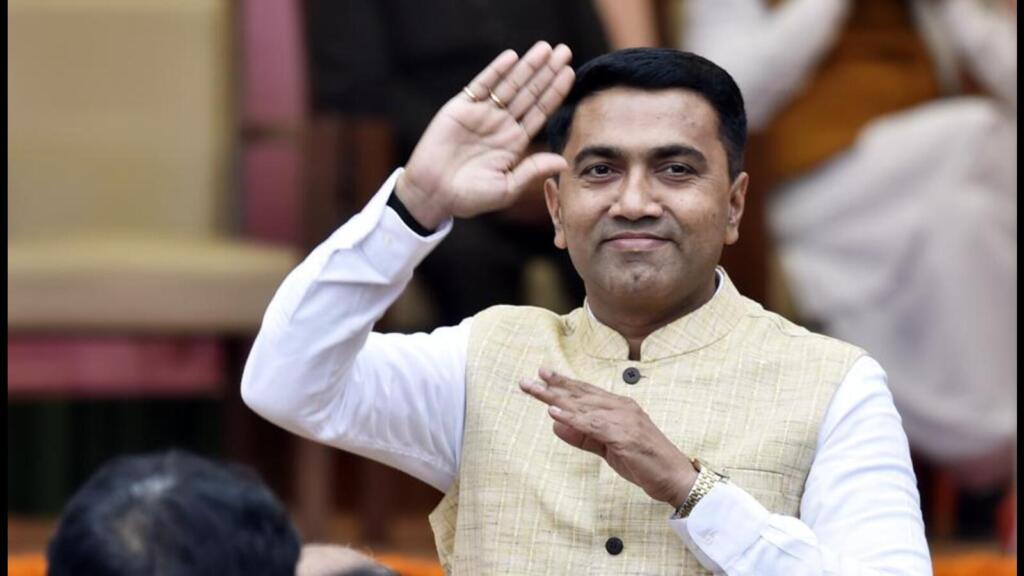
In a significant political development during the monsoon session of the Goa Legislative Assembly, Chief Minister Pramod Sawant called for the introduction of an anti-conversion law to combat what he termed as “forced conversions” and cases of “love jihad.” Drawing parallels with states like Uttar Pradesh that have already implemented similar legislation, Sawant stated that Goa could no longer afford to remain complacent. His remarks came amidst growing allegations of an international network operating within the state, linked to radical groups and suspected in cases involving religious conversion through deceit and coercion.
Demand for Legislation to Curb Forced Conversions
Addressing the assembly on Monday, Sawant asserted that an anti-conversion law was now necessary to protect Goa’s social fabric. “Inter-religion marriages are a matter of personal choice,” he clarified, “but conversions under duress or for monetary incentives cannot be permitted.” The Chief Minister underscored that the proposed law would specifically target forced conversions and not consensual interfaith relationships.
Sawant’s remarks were made in response to a motion introduced by BJP MLA Premendra Shet and AAP MLA Cruz Silva, who raised serious concerns regarding religious conversions allegedly facilitated by foreign-funded organisations. The motion gained momentum following the arrest of a woman identified as Ayesha—formerly known as SB Krishna—by the Uttar Pradesh Police from a rented flat in Aldeia de Goa. She is suspected of kidnapping two Hindu women as part of a broader conversion operation with ideological links to ISIS, the Popular Front of India (PFI), and the Social Democratic Party of India (SDPI).
Opposition Slams ‘National Agenda’ Imposition
The proposal met stiff resistance from the opposition, particularly from Vijai Sardesai, Fatorda MLA and leader of the Goa Forward Party. Sardesai accused the Chief Minister of attempting to impose a national party agenda in a state that has historically enjoyed communal harmony. “There are no verified cases of love jihad in Goa,” Sardesai retorted, demanding that the Chief Minister first table data before pushing for legislation. He questioned the relevance of introducing such a law without substantiated cases and warned against communalising local issues.
He further argued that the real issue was not being addressed—that of a transnational radical network operating covertly in Goa. Referring to the same gated complex in Aldeia de Goa, Sardesai noted, “No local Goans live there, and the activities of the residents remain shrouded in mystery.” He urged the government to focus on security and intelligence failures rather than scapegoating interfaith relationships.
Accused Linked to Radical Conversion Network
The woman at the centre of the current controversy, SB Krishna—alias Ayesha and Nikki—is alleged to be part of a multi-state Islamic conversion racket with links to radical outfits. Her arrest by the Uttar Pradesh police in Goa has raised serious questions about the local administration’s vigilance. According to reports, she had not only converted to Islam but was also instrumental in luring and allegedly abducting two women for religious conversion and marriage under duress.
AAP’s Cruz Silva emphasized that her presence in Goa during major religious events like the Exposition of Saint Francis Xavier shows the deep-rooted penetration of such radical elements. “Goa is an international tourist hub, and such elements operating here under the radar are a matter of grave concern,” Silva warned. He demanded a full-scale investigation into the number of such individuals staying in Goa and the failure of the local police to detect them before other states intervened.
CM Promises to Release Data, Seeks Support
Despite the opposition’s resistance, CM Sawant stood firm on his proposal, reiterating that forced conversions violate individual rights and disrupt societal peace. “If anyone is targeting people with money or other incentives to convert their religion, we must act. We cannot turn a blind eye anymore,” he told the House. He also promised to soon release official data on the number of forced conversion cases and instances of love jihad reported in Goa.
Turning to Congress legislators, Sawant appealed for bipartisan support. “This is not about religion or politics. It’s about protecting people from being manipulated under false pretenses,” he argued. While acknowledging the prevalence of consensual interfaith marriages, he made it clear that any pattern of coercion or monetary inducement should be viewed as a criminal act.
A Growing Security Concern Beyond Religion
As the debate unfolds in the Goa Assembly, the larger question remains: is Goa witnessing the early signs of a deeply entrenched radical network exploiting its liberal image and porous borders? The Chief Minister’s proposal for an anti-conversion law signals a significant policy shift aimed at curbing what is now being perceived as a potential threat to internal security. While opposition leaders rightly demand accountability and data transparency, the arrest of a conversion racket operator with ties to banned outfits reveals vulnerabilities in the state’s security apparatus. Whether this new legislative proposal will receive cross-party support or fall into the quagmire of political disagreement remains to be seen. What is clear, however, is that the issue of forced religious conversions is no longer an abstract debate but a growing national security concern even for the tranquil state of Goa.