
The growing linguistic tensions in Maharashtra have taken a sharper political turn, with BJP MP Nishikant Dubey issuing a fiery challenge to Marathi language enforcers, over recent attacks on Hindi-speaking individuals in Mumbai and Pune.
Dubey’s comments come in response to an incident where MNS workers reportedly assaulted a shopkeeper on Mira Road for failing to converse in Marathi. The altercation, captured on video and now viral on social media, shows MNS members aggressively insisting that the shopkeeper use Marathi instead of Hindi. An FIR has been registered, but the fallout has been far-reaching.
Reacting to the violence, Dubey posted a scathing message on X (formerly Twitter), saying, “If those attacking Hindi speakers in Mumbai truly have courage, then try doing the same to Urdu-speaking people. Even a dog is a lion in its own house; decide for yourself who the real lion is.” His statement was also shared in Marathi, clearly aimed at local political players.
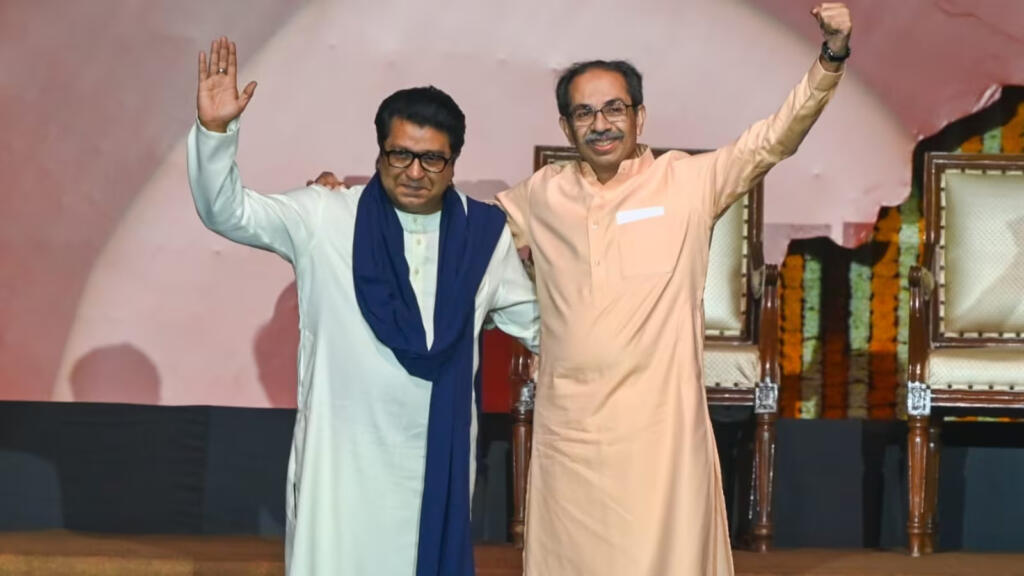
Reacting to Raj Thackeray’s controversial remark ‘beat them, but don’t make a video’, BJP MP Nishikant Dubey launched a blistering counterattack. While speaking to Media, he accused regional leaders of relying on economic contributions from Hindi-speaking states, questioning, ‘You people are surviving on our money. What kind of industries do you have?’ Challenging the selective aggression against Hindi speakers, Dubey asked, ‘If you are courageous enough and beat those who speak Hindi, then you should beat all those who speak Urdu, Tamil, and Telugu.’ Taking it a step further, he dared them to leave Maharashtra: ‘If you are such a big ‘boss’, come out of Maharashtra, come to Bihar, Uttar Pradesh, Tamil Nadu- ‘tumko patak patak ke maarenge’.’ While acknowledging his respect for Marathi people and their historic role in India’s freedom struggle, Dubey accused Raj and Uddhav Thackeray of resorting to “cheap politics” ahead of the BMC elections. He ended his tirade by daring them to go to Mahim and “beat any Hindi or Urdu speaking people in front of Mahim dargah.”
This provocative message is part of a larger narrative Dubey has been pushing, drawing parallels between regional language politics and the historical displacement of Kashmiri Pandits. In an earlier post, he controversially compared Raj Thackeray, Uddhav Thackeray, and Sharad Pawar to separatists and extremists like Salahuddin, Masood Azhar, and Dawood Ibrahim. According to Dubey, the common thread is discrimination; be it on the basis of religion or now, language.
“What’s the difference between Raj Thackeray or Uddhav’s language politics in Mumbai and the Islamist radicalism that forced Kashmiri Hindus out of the Valley?” he questioned. “One persecuted because someone was Hindu; the other, because they speak Hindi.”
Dubey isn’t alone. Other BJP leaders, like Minister Nitesh Rane, have also entered the fray, accusing the Thackeray brothers of sowing division within the Hindu community. Rane went so far as to urge Urdu-speaking citizens to start using Hindi instead, framing the issue as one of cultural integration versus appeasement.
At the core of the controversy is MNS’s continued campaign to enforce the primacy of Marathi in public spaces. The recent incident in Mira Road, where a shopkeeper was beaten for not responding in Marathi, has reignited old debates about linguistic identity, regional pride, and the rights of migrants, particularly those from Hindi-speaking states like Uttar Pradesh and Bihar.
As Maharashtra heads toward high-stakes elections, the language issue is fast becoming a battleground of ideologies between regional nationalism and broader national integration.
In this politically charged atmosphere, Dubey’s challenge has only escalated tensions, turning what was a localized skirmish into a flashpoint of national debate.