
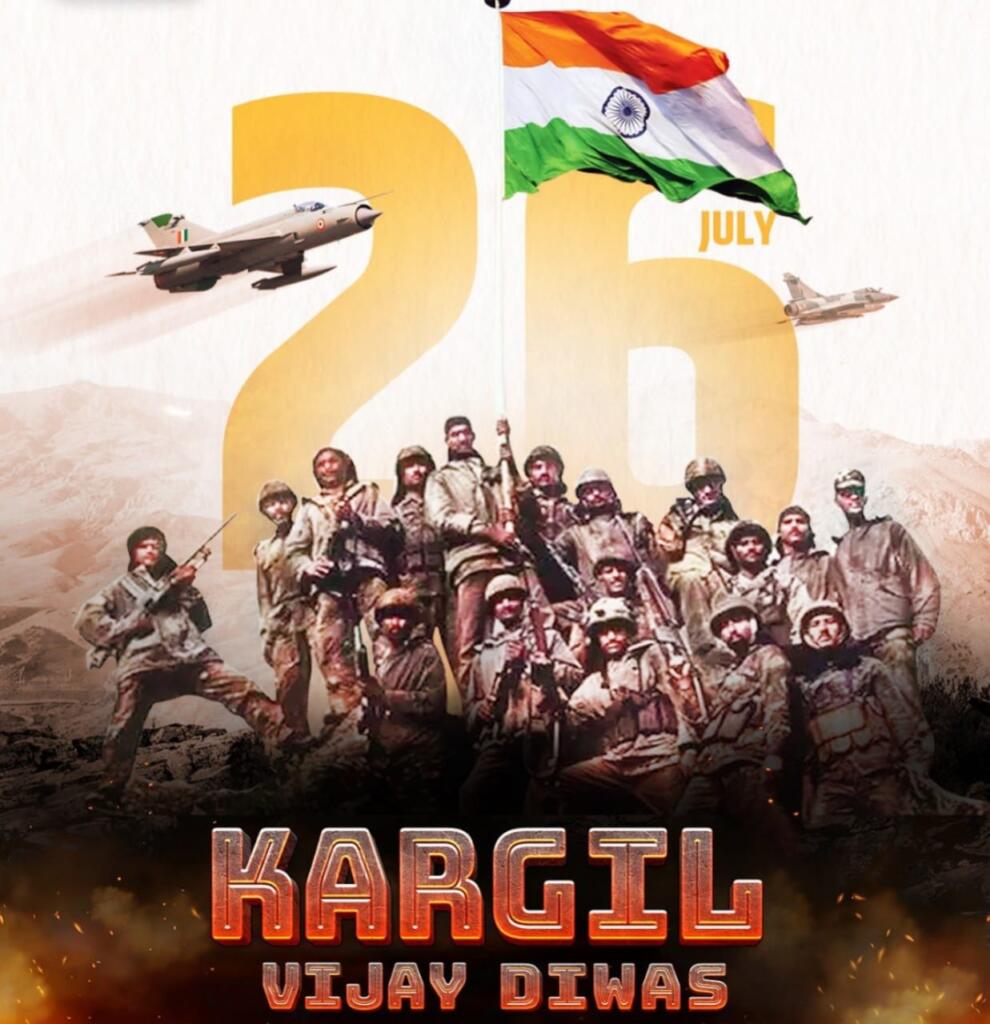
As the nation marks the 26th Kargil Vijay Diwas, India not only remembers the past, but it showcases how far it has come. From the rugged, blood-soaked peaks of 1999 to the high-tech precision of Operation Sindoor, the Indian Army’s journey is a testament to relentless evolution and unyielding resolve.
At dawn today, as light touches the peaks of Dras and Kargil, India pauses in solemn remembrance. July 26, Kargil Vijay Diwas marks the day in 1999 when Indian soldiers, battling impossible odds, pushed back Pakistani intruders and reclaimed what rightfully belonged to the nation. But this year’s commemoration isn’t just about honouring the fallen, but it’s also a celebration of India’s incredible defence transformation.
Kargil 1999: Bravery Against the Odds
The Kargil War was unlike any India had fought. Pakistani soldiers and militants, disguised and entrenched in high-altitude positions, sought to alter the Line of Control by stealth. Operation Vijay was India’s fierce answer. The Indian Army, often under-equipped and facing sub-zero conditions mounted uphill assaults against fortified enemy positions.
Peaks like Tiger Hill, Tololing, Batra Top, and Gun Hill became synonymous with valour. More than 500 Indian soldiers were martyred, including heroes like Captain Vikram Batra, Lt. Manoj Pandey, and many others who became the face of India’s fighting spirit. Their sacrifices laid the foundation of a modern Indian defence mindset: never forget, never forgive, never be unprepared again.
From Raw Grit to Refined Power: The Defence Evolution
The message from Kargil was clear, India must be future ready. And in the 26 years since, India has done just that. Indigenous defence manufacturing, modernisation of warfare capabilities, surveillance upgrades, and precise intelligence gathering have redefined India’s strategic posture.
This evolution was most recently on display during Operation Sindoor, conducted earlier this year. A symbol of precision planning, technological superiority, and rapid execution, OP Sindoor stands in stark contrast to the limitations faced in 1999. From satellite imagery and real-time drone reconnaissance to AI-driven threat assessments and indigenous weaponry, the Indian Army of today is prepared for the challenges of tomorrow.
Operation Sindoor: A New Era in Combat Readiness
Operation Sindoor was not just a military exercise, it was a declaration. A declaration that India is no longer reactive, but proactive. Where Kargil was fought with grit, OP Sindoor demonstrated a fusion of bravery and brains. India’s soldiers are now backed by cutting-edge technology, domestically produced arms, advanced logistics systems, and global strategic partnerships.
Whether it is guarding the LoC, neutralising terror threats, or countering cyber warfare, the Indian defence forces are equipped, alert, and in command.
Honouring the Past, Owning the Future
Across the country today, tributes pour in from the Kargil War Memorial in Dras to classrooms in faraway towns. From cultural programmes to student debates, the entire nation echoes one message: India remembers. India stands ready.
The government has also unveiled initiatives to deepen citizen engagement. These include an ‘e-shradhanjali’ portal allowing people to pay digital tribute to martyrs, a QR-code based storytelling app that brings battlefield narratives to life, and new tourist access points near the LoC, like the Indus Viewpoint at Batalik, to educate people about India’s strategic landscape.
Congress Skipped Kargil Vijay Diwas From 2004–2009
Despite the national significance of Kargil Vijay Diwas as a solemn tribute to the bravery of India’s armed forces, the Congress party notably refrained from officially commemorating the day for five consecutive years between 2004 and 2009. This absence, many argue, stemmed from a political perception of the 1999 Kargil victory as a triumph of the BJP-led NDA rather than a national military success.
In fact, Congress party leader Rashid Alvi had controversially remarked in 2009 that ‘Kargil isn’t a thing to be celebrated’, questioning the nature of the war and attributing the celebrations solely to the NDA. His statement reflected a dismissive tone toward the sacrifice of Indian soldiers who reclaimed peaks occupied by Pakistani forces in a surprise infiltration.
The sentiment revealed how political bias, at times, overshadowed national pride turning what should have been a unifying day of remembrance into a partisan silence.
From Kargil to Sindoor: India Stands Taller Than Ever
What began in 1999 as a fight for territory has now become a full-blown doctrine of self-reliance, strength, and strategic foresight. India’s armed forces are no longer just warriors on the battlefield; they are pioneers of a defence revolution.
On this Kargil Vijay Diwas, India salutes the brave and celebrates the progress. From the snowy cliffs of Tololing to the sharp precision of OP Sindoor, the journey of India’s armed forces is nothing short of extraordinary.
The message is loud and clear: Bharat is prepared, Bharat is powerful, and Bharat never forgets.