


















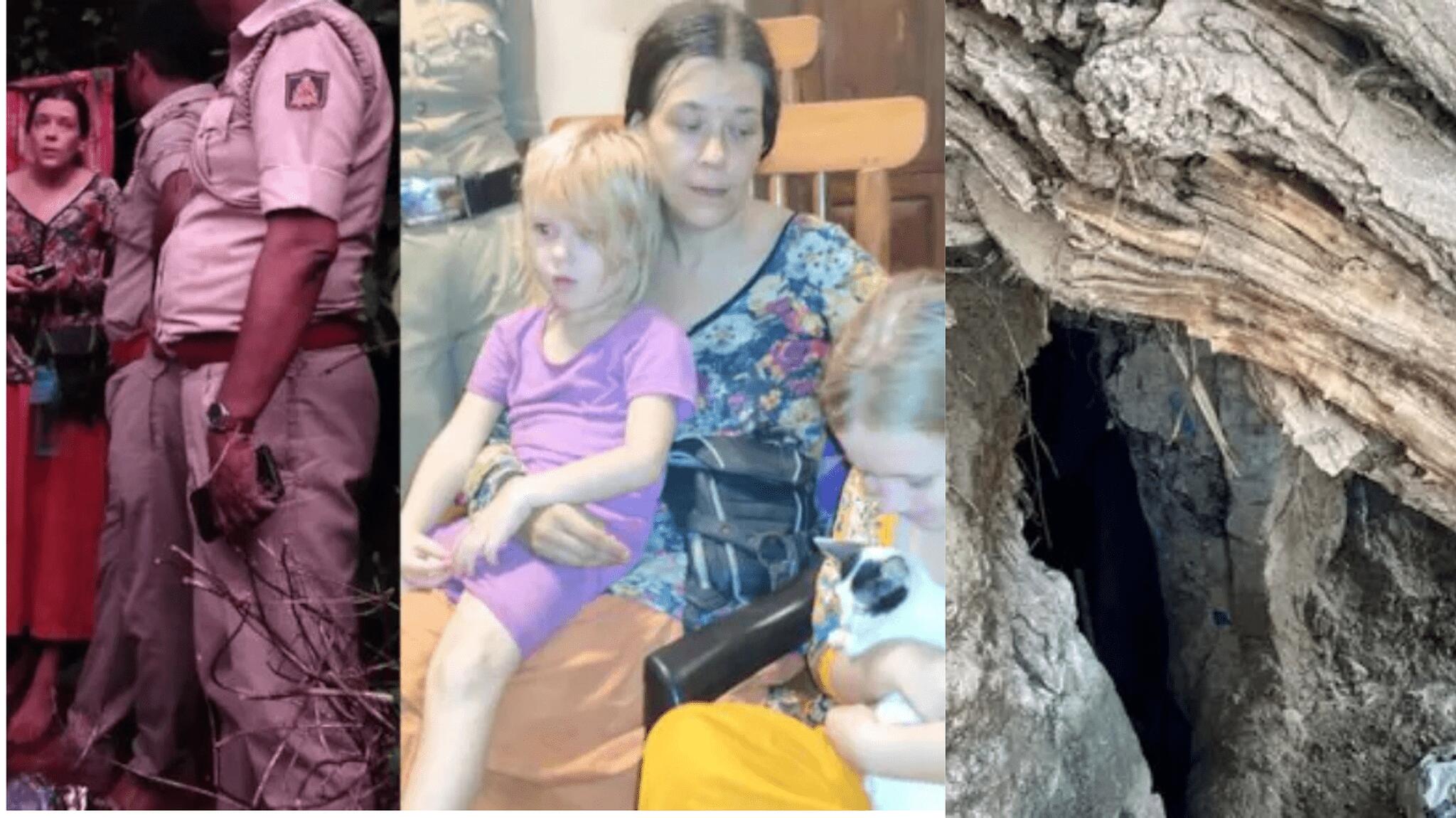
A 40-year-old Russian woman, Nina Kutina, who was recently found living with her two young daughters in a cave near Gokarna, has shared her side of the story, saying they chose a quiet, artistic life close to nature, far from how their situation has been portrayed in the media.
Kutina and her daughters, Preya (6) and Ama (4), were discovered on July 11 in a secluded cave in the Ramatirtha hills of Kumta taluk, in Karnataka’s Uttara Kannada district, where they had spent nearly two weeks in isolation.
Speaking to news agency PTI, Kutina said, “We woke up with the sun, swam in rivers and lived in nature. I cooked on a fire or gas cylinder depending on the season and got groceries from a nearby village. We painted, sang songs, read books and lived peacefully.”
A Life on the Move
Kutina, originally from Russia, said she has been travelling for the past 15 years, visiting around 20 countries. She is a mother of four, and said each of her children was born in a different country.
“I delivered all of them myself, without hospitals or doctors, because I know how to do it. No one helped me, I did it alone,” she said.
With a background in art and Russian literature, Kutina said she teaches her daughters herself. While the children have never attended formal school, she now plans to begin official homeschooling.
“They are very smart, healthy and talented. Everyone who meets them says so,” she added.
To support herself and her family, Kutina said she creates artwork, produces music videos, and takes up teaching and babysitting jobs. “I earn money through all these activities. And if I don’t have any work, if I can’t find anyone who needs what I can offer, then my brother, my father, or even my son helps me. So we always have enough money for what we need.”
A Voluntary Life in the Wild
Local police discovered the family during a routine safety patrol in the Ramateertha hills. Inspector Sridhar SR and his team from Gokarna police station spotted movement near a cave and went in to investigate. Inside, they found Kutina and her daughters living with basic supplies.
Kutina told the police she had come to the area for meditation, and that she regularly worshipped an idol of Lord Rama found in the cave.
Authorities expressed concern, citing the cave’s steep terrain, wildlife threats, and landslide risks, especially given the presence of two young children.
Though the family was moved to safety, Kutina now says they are being kept in unhygienic and uncomfortable conditions.
“We are now kept in an uncomfortable place. It’s dirty, there’s no privacy and we get only plain rice to eat. Many of our belongings were taken, including the ashes of my son who passed away nine months ago,” she said.
She also took issue with how the situation has been portrayed in the media: “Everything shown on TV about us is false. I have videos and photos that show how clean and happy our life was before.”
Visa Trouble and Legal Action
During a follow-up investigation, police and forest officials recovered Kutina’s passport and visa, which had expired on April 17, 2017. She had reportedly entered India on a business visa and travelled to Gokarna via Goa.
The case has since been referred to the Foreigners Regional Registration Office (FRRO) in Bengaluru, which has begun steps to repatriate Kutina and her children to Russia.
Kutina said she is now in contact with the Russian Embassy, which is assisting her family.
Ex-Husband Seeks Access, But Denied Entry
Following the discovery, Kutina’s ex-husband, Dror, travelled to the Tumakuru detention camp, where Kutina and her daughters are currently housed. However, he said he was not allowed to meet them.
“I cannot meet my daughters,” Dror said, explaining that the authorities had asked him to obtain a written paper signed by the FRRO before granting access.
‘Why I Stayed in India’
When asked why she hadn’t returned to Russia, Kutina cited a number of emotional and legal hardships.
“There have been many complicated reasons. First, there were multiple personal losses — not just the death of my son, but also a few other close people. We were constantly dealing with grief, paperwork, and other problems.”
Despite travelling to four other countries recently, she said it was India that continued to call her back.
“We love India deeply — its environment, its people, everything.”
This unusual story, now under the watch of immigration and child welfare authorities, raises deeper questions around parenting rights, alternative lifestyles, and immigration law. For Kutina and her daughters, the days ahead remain uncertain — but her message is clear: they were not running away from the world, only trying to live simply and peacefully within it.