



















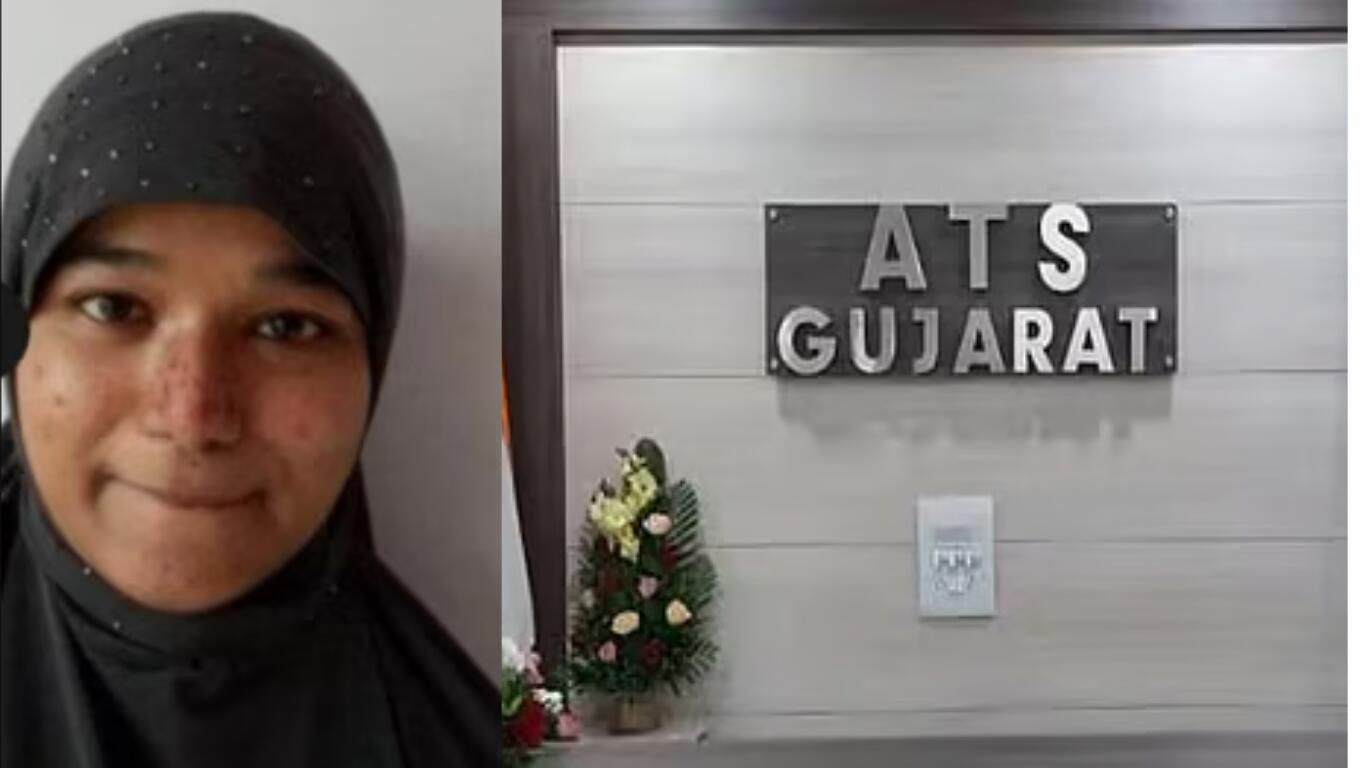
In a major breakthrough, the Gujarat Anti-Terrorism Squad (ATS) arrested a 30-year-old woman, Shama Parveen, in Bengaluru for allegedly running a terror module linked to Al-Qaeda in the Indian Subcontinent (AQIS). Her arrest follows the earlier apprehension of four operatives from different parts of India, indicating a larger radical network operating across state lines.
Key Handler Nabbed in Bengaluru
Shama Parveen, a native of Jharkhand, had been living in the Manorayanapalya area of Bengaluru for the past three years with her brother, a software engineer. Investigators believe Parveen was the chief coordinator of the AQIS-linked module, operating largely online. A graduate by education, she reportedly radicalised youth via social media platforms, including Instagram, sharing extremist content and encouraging violent jihad.
Authorities conducted a joint operation between Gujarat ATS and local Karnataka police to apprehend her. Upon her arrest, several digital devices, including a laptop and mobile phones, were seized, which allegedly contained communications with foreign handlers and other operatives.
Gujarat Home Minister Harsh Sanghvi confirmed her involvement, stating: “She is highly radicalised and ran an online terror module. Important Pakistani contacts have been recovered from her electronic devices.”
Web of Radical Operatives Across India
Parveen’s arrest came after the ATS earlier detained four young men on July 23 from Gujarat, Delhi, and Noida: Mohd Fardeen, Sefullah Kureshi, Zeeshan Ali, and Mohd Faiq. Aged between 20 and 25, the suspects were reportedly in contact via a secure messaging app and were assigned high-profile targets across India.
Police claim the group had cross-border links and received instructions from handlers abroad. Intelligence inputs indicate the possibility of coordinated terror attacks being planned for prominent urban centres. During interrogation, the arrested men revealed their connection with Parveen, leading ATS teams to Bengaluru.
This string of arrests also comes in the backdrop of the United Nations’ 32nd report by the Analytical Support and Sanctions Monitoring Team, which warned that AQIS, under its current emir Osama Mehmood, is actively trying to expand operations in India, particularly Jammu and Kashmir, Bangladesh, and Myanmar.
Radical Ideology and Online Recruitment
Police sources suggest that Parveen had embraced the AQIS ideology and acted as a key propagandist. By disseminating jihadist videos and speeches of known Al-Qaeda operatives, she influenced impressionable minds to take up arms against the Indian state. Authorities believe she played a key role in recruiting and ideologically priming the four operatives caught earlier.
This marks a worrying trend of female-led radicalisation campaigns in India, using anonymity and reach of online platforms. Parveen was reportedly part of several encrypted groups that discussed attack strategies, shared propaganda materials, and coordinated logistical support.
Bengaluru police have heightened surveillance in light of her arrest, given her established network and possible local sympathisers.
AQIS and Its Expanding Footprint
Al-Qaeda in the Indian Subcontinent was formed in 2014 by the then Al-Qaeda leader Ayman al-Zawahiri. Initially focused on US and Pakistani targets, AQIS shifted its focus toward India after the death of its leader Asim Umar in 2019. The group later began publishing a propaganda magazine called Nawa-Ghazwatul-Hind, aimed at inciting jihad in India.
The network first gained attention when the National Investigation Agency (NIA) arrested 53 operatives from Assam in 2022. Investigations linked them to Bangladeshi groups such as Ansarullah Bangla Team. Madrassas, schoolteachers, and underground preachers were all found to be part of this vast recruitment and indoctrination network.
A recent UN report also confirmed links between AQIS and the Tehrik-e-Taliban Pakistan (TTP), highlighting their shared training camps and joint operations under the name Tehreek-e-Jihad Pakistan. The Taliban’s indirect support has also been documented, further underlining the international dimension of this security threat.
Vigilance and Coordination Key to Counterterrorism
The arrest of Shama Parveen marks a significant milestone in India’s fight against homegrown terrorism and radicalisation. It also underscores the increasing complexity of terror threats in the digital age, where ideologies transcend geography and recruitment is just a click away.
Coordinated efforts by Gujarat ATS, central intelligence agencies, and local law enforcement have proven effective in unearthing these modules. However, sustained surveillance, international cooperation, and robust digital intelligence capabilities are essential to staying ahead of such threats.
India’s security agencies must continue to adapt to new-age terror tactics, and citizens must remain vigilant to prevent radical ideologies from taking root within communities. The battle against extremism is far from over, but decisive action like this offers a strong deterrent against forces that threaten national security.