
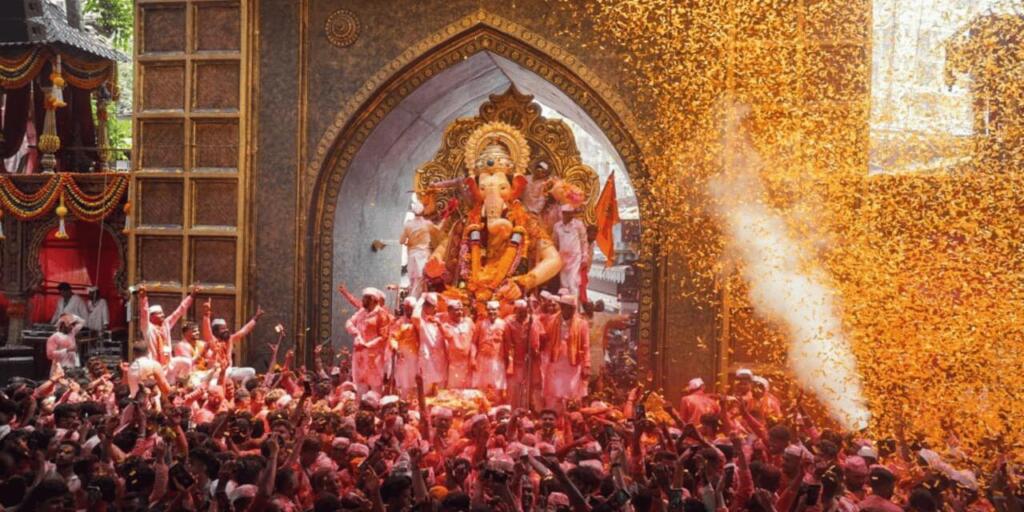
In a landmark move blending tradition with policy, the Maharashtra government has officially declared Ganeshotsav, the 10-day grand celebration of Lord Ganesha, as the ‘Maharashtra State Festival’ or ‘Rajya Utsav’. The announcement was made in the Legislative Assembly by Cultural Affairs Minister Ashish Shelar, following a demand raised by BJP MLA Hemant Rasane. This decision has been hailed as a recognition of the festival’s deep cultural, historical, and spiritual roots in Maharashtra.
Ganeshotsav, which begins on Ganesh Chaturthi and continues until Ananta Chaturdashi, has long transcended religious celebration to become a cultural institution in the state. With this new designation, the festival will receive state-level promotion and support, further embedding its importance in Maharashtra’s identity.
Tilak’s Vision: Ganeshotsav as a Tool of National Unity
Originally a private and household festival, Ganeshotsav underwent a revolutionary transformation in 1893 when freedom fighter Lokmanya Bal Gangadhar Tilak turned it into a public event in Pune. At the time, British colonial authorities had banned political gatherings. Tilak cleverly used the cultural and religious appeal of Ganesha, worshipped widely across caste and class lines, to bring people together under the guise of religious celebration.
Through public processions, speeches, devotional songs (bhajans), and community engagement, Tilak’s Sarvajanik Ganeshotsav movement turned the festival into a platform for nationalism. This innovative use of tradition helped strengthen resistance against British rule and created a template for community-building and social unity. The practice soon spread across cities like Mumbai, Kolhapur, and Nagpur, embedding Ganeshotsav into the state’s socio-political fabric.
Today, Ganeshotsav is not just a religious observance but a major cultural and social event, encompassing artistic pandals, social awareness themes, charitable activities, and mass participation.
Ganpati Bappa Morya: The Chant and Its Significance
One cannot talk about Ganeshotsav without mentioning the ubiquitous chant: “Ganpati Bappa Morya!” This chant has profound historical and spiritual meaning:
- Ganpati: Another name for Lord Ganesha, meaning “Lord of the Ganas (attendants)”
- Bappa: A term of endearment in Marathi meaning “father” or “lord”
- Morya: Refers to Morya Gosavi, a 14th-15th century saint and devotee of Lord Ganesha from Chinchwad, near Pune
The phrase expresses love, reverence, and a call for the Lord’s blessings. It became popular during Tilak’s revival of Ganeshotsav and has remained central to the festival’s spirit.
What Does ‘State Festival’ Status Entail?
Ganeshotsav’s new designation as a ‘State Festival’ is not just symbolic. It carries several administrative and cultural implications:
- Government Funding: The state will now allocate direct funding for infrastructure, security, and festival organisation.
- Cultural Promotion: The Maharashtra government will promote Ganeshotsav as a signature cultural event both nationally and globally.
- Integration of State Themes: Mandals (public festival organisers) will be encouraged to highlight state initiatives, such as Operation Sindoor, social campaigns, or military tributes, in their decorations and displays.
- Tourism Boost: The festival could draw more domestic and international tourists, boosting the local economy and showcasing Maharashtra’s vibrant traditions.
Minister Ashish Shelar noted, “Public Ganeshotsav was started in Maharashtra in 1893 by Lokmanya Tilak. This festival is deeply rooted in social, national, freedom, self-respect, and linguistic pride. It is a matter of honour for Maharashtra.”
POP Idols Allowed Again: Government Eases Restrictions
Another important announcement came regarding the use of Plaster of Paris (PoP) idols. The previous government had banned PoP idols citing environmental concerns and Central Pollution Control Board (CPCB) guidelines. However, Shelar clarified that a comprehensive study, conducted by the Kakodkar Committee through the Rajiv Gandhi Science Commission, found PoP idols could be permitted with proper environmental safeguards.
Based on these findings, and with approval from Union Minister Bhupender Yadav, the ban was lifted. The Bombay High Court also ruled in favour of allowing PoP idols. Thus, idol-making, sale, and immersion using PoP are now officially permitted, bringing relief to artisans and devotees alike.
Other State Festivals Across India: Maharashtra Joins a Cultural League
Maharashtra is not the first Indian state to designate a festival as a State Festival. Several other states have already honoured their unique cultural traditions in this manner:
- Arunachal Pradesh: Pakke Paga (Hornbill) Festival was declared a State Festival in 2019, focusing on hornbill conservation.
- Manipur: Shirui Lily Festival, celebrating the state flower, was recognised in 2017.
- Tripura: Meitei Umang Lai Haraoba became a State Festival in 2015, celebrating traditional deities with dances and rituals.
- Jharkhand: Oraon Pilgrimage at Sirasita was given state festival status in early 2025.
- Karnataka: Mysuru Dasara is an official State Festival, famous for its grand palace processions and cultural programmes.
- Andhra Pradesh: Ahobilam Paruveta Utsavam, centred on Narasimha Swamy, was declared a state festival in 2024.
- Telangana: Sadar Sammelan (Buffalo Parade) became a State Festival in 2024.
- Uttarakhand: Maa Varahi Bagwal Mela was recognised as a State Government fair/festival in 2022.
These designations help preserve local traditions, boost tourism, and integrate heritage into mainstream cultural narratives.
A Cultural Reaffirmation for Maharashtra
Heading: Maharashtra Leads by Tradition and Example
By officially declaring Ganeshotsav as its State Festival, Maharashtra has not only honoured a deeply cherished tradition but also affirmed the role of culture in governance. This move reinforces the spirit of Lokmanya Tilak’s vision—using tradition as a means of unity, pride, and progress.
With state support, the festival can now evolve further while retaining its core values. As other states follow suit by celebrating their own unique traditions, Maharashtra’s initiative shines as a model of how heritage, policy, and community engagement can converge to strengthen identity and cohesion in modern India. Ganpati Bappa Morya!