
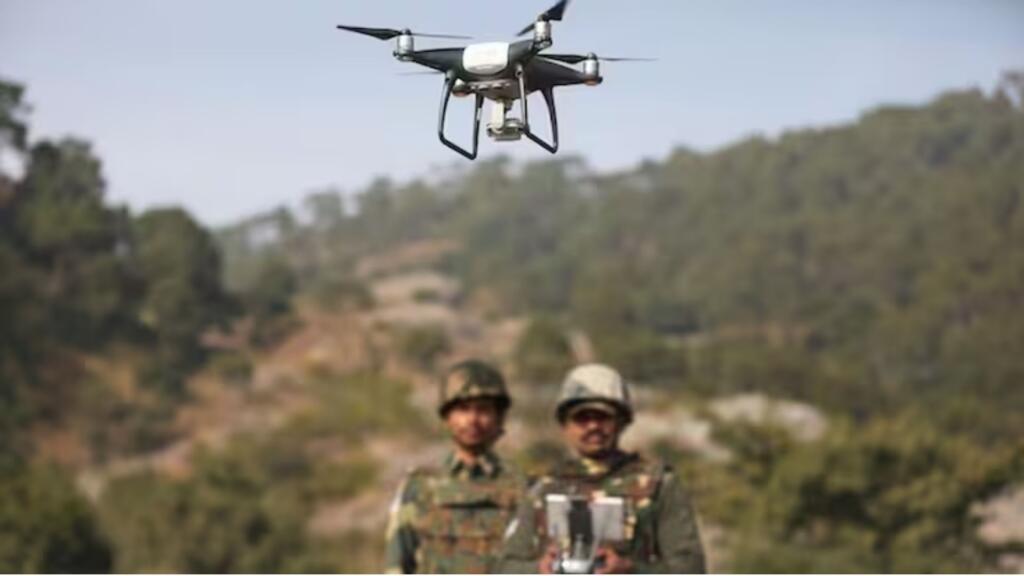
Drone technology is growing rapidly these days and now it’s not just used for surveillance or spying but is also deployed directly in the battlefield. In many parts of the world, like the Middle East, Afghanistan, and especially in the Ukraine-Russia war, drones are being used extensively.
Ukraine has adopted new and better ways of using drones in this war like Ukraine has made heavy use of small and inexpensive drones against Russia. These drones quickly send pictures and videos of the enemy’s territory, helping Ukraine understand Russian troop movements. In addition to this, Ukraine has also armed drones with weapons, meaning small arms or bombs are attached to these drones so that the enemy can be attacked without putting many soldiers at risk.
Ukraine links several drones together to work in coordination, where one drone identifies the enemy’s position and another attacks the same spot. Also, drones are flown in such a way that they can evade enemy radar and missiles and easily enter and bring back intelligence or strike. Sometimes Ukraine also sends drones to mislead the enemy so the real attack can happen somewhere else. In this way, with the help of drones, Ukraine has strengthened its war strategies, helping them track and counter Russian moves effectively.
BSF’s new plan
To enhance its technological strength along sensitive borders like India-Pakistan, the Border Security Force (BSF) has launched a major plan. Under this plan, BSF is procuring advanced drone systems, anti-drone technologies, and many essential UAV-related items on a large scale. This strategic move was taken after Operation Sindoor, when BSF conducted an in-depth review of its operations.
In this review, it was found necessary that drone surveillance and combat capabilities be improved immediately. A senior official said the government has given the green signal to strengthen BSF’s drone systems. Given the changed scenario after Operation Sindoor, BSF is preparing to shift its strategy.
This drone squadron will be deployed at selected border outposts spread over more than 2,000-kilometre-long India-Pakistan border. These outposts stretch from Jammu in the north to Punjab, Rajasthan, and Gujarat in the west. The squadron will include various types of small and large surveillance and combat drones, which can be deployed in any wartime situation or during strategic campaigns like Operation Sindoor.
A small team of about two to three personnel will be deployed at each selected border post. These personnel are being trained in drone operation and handling related equipment in teams. Some drones and necessary equipment are being procured for the first squadron. Along with this, the roofs and walls of existing bunkers at the border are being covered with strong metal sheets to provide protection against drone attacks.
Special measures
Even though anti-drone systems are still a priority for BSF, especially as incidents of drones carrying explosives or illegal goods from across the border are multiplying, the force’s plan is much broader than this.
An official said that BSF is now working on improving the entire drone system. This includes such surveillance and reconnaissance drones that can provide real-time monitoring in difficult terrain, forests, and river areas. At the same time, emphasis is being placed on anti-drone systems like jammers, radars, kinetic interceptors, and RF-based technologies to detect, stop, or shoot down enemy drones.
AI-powered platform
BSF is now developing a drone analytics platform with the help of Artificial Intelligence (AI). This platform will be able to automatically identify targets using drone camera feeds, analyze patterns, and predict future activities.
A senior BSF official said, ‘In the next war or infiltration attempt, drones deployed in the sky will play a crucial role along with the personnel on the ground. We must be prepared at all costs.’