
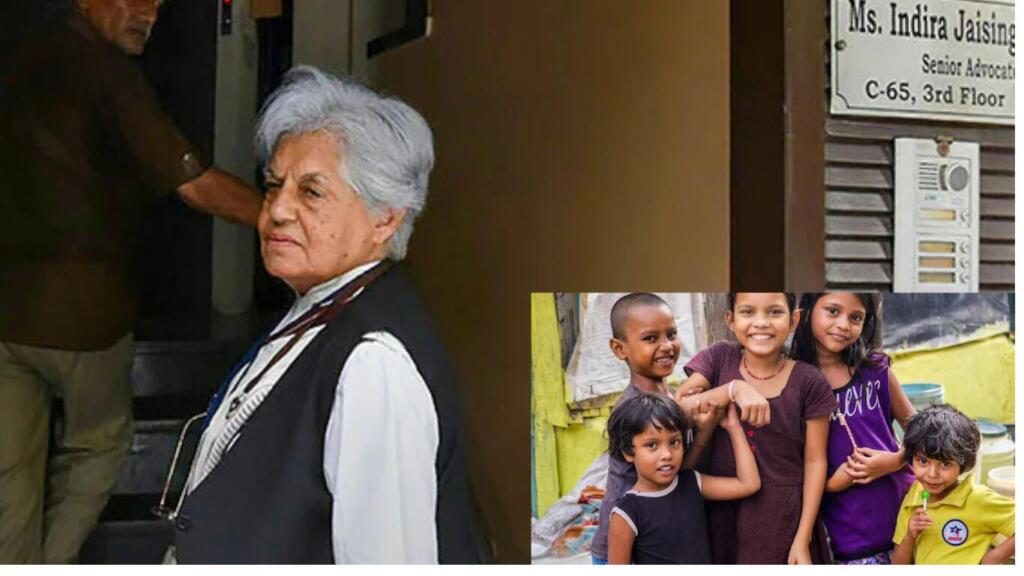
Senior advocate and amicus curiae Indira Jaising has stirred fresh controversy with her written submissions to the Supreme Court in the ongoing Nipun Saxena vs Union of India case. In a widely criticised move, Jaising has urged the apex court to read down the statutory age of sexual consent from 18 to 16 years.
Jaising argued that the current legal framework under the Protection of Children from Sexual Offences (POCSO) Act, 2012 and Section 375 of the Indian Penal Code unfairly criminalises consensual relationships between adolescents aged 16 to 18. According to her, the law treats teenage consensual sex as abuse, thereby violating adolescents’ constitutional rights and ignoring their autonomy.
She claimed there is no rational basis or empirical data justifying the 2013 amendment that raised the age of consent from 16 to 18, an increase that reportedly bypassed parliamentary debate and contradicted the Justice Verma Committee’s recommendation to retain 16.
Centre Raises Alarm: A Gateway to Trafficking and Exploitation
The Union Government has come down heavily on Jaising’s plea. The Centre categorically warned that lowering the age of consent could open floodgates for rampant abuse, child trafficking, grooming, and exploitation of vulnerable teens under the garb of “consensual relationships.”
Government officials highlighted that a significant rise in POCSO cases involving adolescents aged 16-18 is no justification for diluting child protection laws. On the contrary, they believe such a move would only embolden sexual predators, giving them a legal shield under the misused pretext of teenage consent.
The government has rightly pointed out that loosening laws designed to protect minors from sexual crimes could derail decades of child welfare progress. The Centre maintains that the age of consent at 18 is in line with global child protection norms and reflects the complex psychological and emotional development of adolescents.
The BJP Hits Back: “Activism Disguised as Reform”
The BJP’s IT cell chief Amit Malviya lashed out at Indira Jaising on X (formerly Twitter), labelling her views as “radical leftist” and “anti-child safety.”
“Radical leftist Indira Jaising wants the age of consent lowered to 16,” Malviya wrote. “Instead of fighting exploitation, she wants to legalise it. This is not judicial reform—this is judicial sabotage. Thankfully, people like her don’t make laws in India.”
“Are we seriously debating whether 16-year-olds are mature enough to give sexual consent?. This isn’t activism—it’s an assault on the moral fabric of our society.” Malviya added
He further accused Jaising and others like her of systematically pushing for social changes that weaken traditional safeguards, endanger minors, and embolden predators. Malviya even called for Jaising and other like-minded activists to retire from public life, asserting that India needs a new generation of leaders committed to child safety and national interest.
Legalising Predation? The Risk of Grooming and Coercion
Experts in child psychology and law enforcement agree that reducing the age of consent could make young adolescents more vulnerable to coercion and grooming. The age bracket of 16 to 18 is often when teenagers begin exploring relationships, but experts insist that such exploration must be accompanied by strong legal protections—not stripped of them.
Child rights advocates argue that in many POCSO cases, the victims are lured into so-called “consensual” relationships by older men who manipulate their emotional vulnerabilities. Lowering the age of consent, they warn, would only legitimise this abuse.
Moreover, critics point out that Jaising’s argument about inter-caste and interfaith romantic relationships being criminalised misses the point. “The problem isn’t with laws protecting children. It’s with adults exploiting children and using relationships to justify it,” said one senior police official.
Consent or Protection?
While some high courts, including Bombay and Madras, have noted concerns about criminalising consensual adolescent relationships, the broader judicial community remains cautious. Judges have stressed that not all acts involving minors are coercive, but simultaneously recognise the difficulty of distinguishing consent from manipulation at such a young age.
Jaising has proposed a “close-in-age” exemption clause to shield consensual acts between adolescents from prosecution. But critics worry that such legal grey zones can be exploited by predators and will place an unmanageable burden on the judiciary to determine psychological maturity and informed consent on a case-by-case basis.
Why India Must Not Compromise on Child Safety
At a time when the nation is grappling with increasing reports of child exploitation, trafficking, and grooming, calls to dilute protective laws must be treated with utmost caution. Indira Jaising’s proposal to lower the age of consent from 18 to 16 is not merely a legal suggestion—it is a dangerous precedent that risks legitimising child exploitation under the guise of autonomy.
While discussions on adolescent rights are important, these must never come at the cost of safety. India must ensure its legal system upholds the best interests of children, which include protection from abuse, grooming, and undue psychological burden.
As the Supreme Court weighs its decision, it is vital that judicial activism does not become a tool to undermine hard-won safeguards for India’s youth. The nation must remain steadfast in protecting its children, no matter how cleverly cloaked the argument for change may appear.