
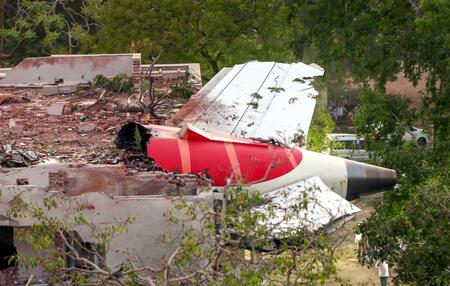
In the aftermath of the devastating crash of Air India Flight 171, the U.S. National Transportation Safety Board (NTSB) has urged media outlets and the public to refrain from drawing early conclusions. The warning comes as speculation grows around the causes of the accident that claimed 260 lives.
Jennifer Homendy, Chair of the NTSB, described the ongoing coverage as “speculative and premature,” urging everyone to allow the investigation to unfold without distractions or assumptions. “This is not the time to speculate. It’s the time to let investigators do their work,” she said.
What We Know So Far
On June 12, 2025, Air India Flight 171, a Boeing 787, crashed shortly after takeoff from Ahmedabad. The aircraft came down near B.J. Medical College, killing 241 people on board and 19 on the ground. One passenger survived.
Initial findings from India’s Aircraft Accident Investigation Bureau (AAIB) revealed that both of the aircraft’s engine fuel-control switches were moved to “cutoff” seconds after takeoff. Although they were reactivated shortly after, the engines had already lost power, leading to the tragic crash.
Cockpit voice recordings show the co-pilot, Clive Kunder, questioning Captain Sumeet Sabharwal about the unexpected action. The captain reportedly denied having touched the switches, according to the preliminary report. Sabharwal was an experienced pilot with over 8,000 hours flying the same aircraft model.
Why Experts Are Urging Caution
Although the early data points to a possible cockpit error, Jennifer Homendy made it clear that jumping to conclusions at this point could be misleading. “It’s critical that we focus on facts, not theories,” she stated, adding that the final analysis may take months to complete.
The NTSB, which is assisting the Indian investigation, has also reminded the media that it is the AAIB leading the inquiry. Any further questions, the board said, should be directed to Indian authorities.
Indian Authorities and Pilots Respond
Back in India, the AAIB echoed the NTSB’s message, urging news organisations not to interpret the preliminary report as a verdict. Air India’s CEO, Campbell Wilson, issued a public statement reinforcing that the report “does not assign blame” and should not be used to speculate about the crew’s actions.
The Federation of Indian Pilots, a respected industry body, also criticized some of the early media coverage, calling it “irresponsible” and urging reporters to show restraint.
Safety Measures Already Underway
As a precautionary step, India’s Directorate General of Civil Aviation (DGCA) has ordered inspections of fuel-control systems on all Boeing 787 and 737 aircraft in the country. So far, no faults have been found in other aircraft.
The flight’s black boxes—containing the flight data and cockpit recordings—have been sent to the United States for deeper analysis, in collaboration with the NTSB, Boeing, GE Aerospace, and the UK’s aviation investigation team.
Where Things Stand Now
The investigation is looking at all possibilities: pilot error, a potential mechanical fault, or even software malfunction. Because of the aircraft’s twin-engine safety systems, experts say it’s highly unusual for both engines to shut down simultaneously—something that makes this case especially complex.
Final conclusions are expected to take several months, as investigators examine every piece of evidence before making their findings public.
A Tragedy That Deserves the Truth, Not Theories
This accident has left families grieving and a nation demanding answers. But experts agree—rushing to find someone to blame won’t help.
For now, authorities urge us to be patient, compassionate, and responsible in how we talk about this tragedy. The investigation is underway, and until it’s complete, the most respectful thing we can do is let the truth emerge, step by step.