
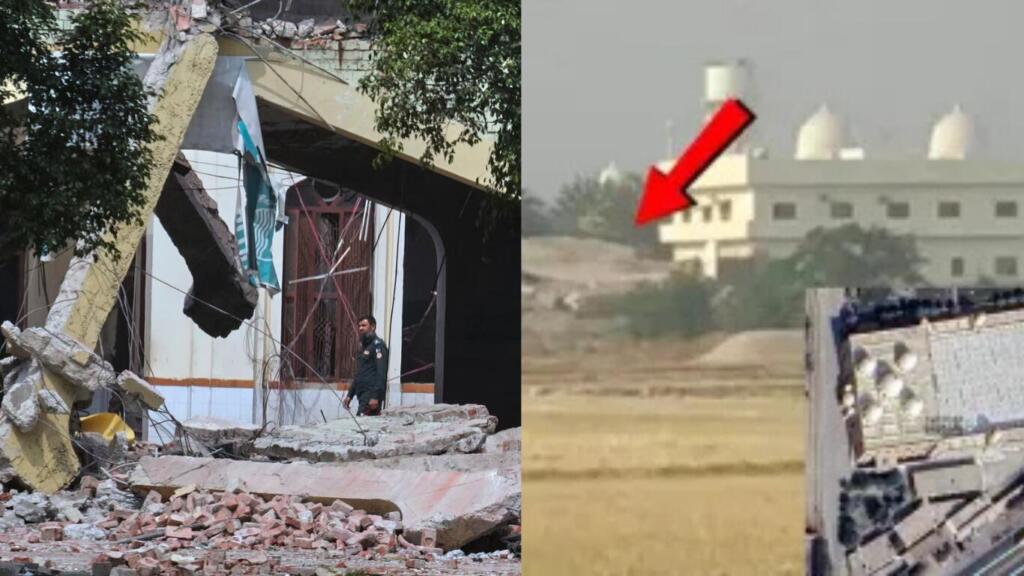
In a clear sign of rising panic within Pakistan’s terror ecosystem, Lashkar-e-Taiba (LeT) is now planning to abandon its decades-old headquarters in Muridke. This fear-driven move comes in the aftermath of India’s daring “Operation Sindoor,” a precision strike that has shaken Pakistan’s military-terror infrastructure to its core. After facing the wrath of Indian firepower, both LeT and its proxy wing, The Resistance Front (TRF), are scrambling for cover.
Intelligence reports suggest that the Pakistan Army, rattled by India’s surgical precision and international scrutiny, is facilitating the relocation of these terror networks to Bahawalpur a signal that the Indian Army’s message has been clearly received. With their shelters no longer safe and their sponsors on the backfoot, Pakistan’s terror groups are not only in disarray but also preparing for a future fraught with fear of Indian retaliation.
Operation Sindoor: India Strikes Back with Precision
India’s firm and calculated military response came soon after the heinous terrorist attack on April 22 in Pahalgam, Jammu & Kashmir, which resulted in the loss of lives of 26 tourists. The Indian Army, acting swiftly under political and military leadership, launched “Operation Sindoor”, high-impact mission targeting terror infrastructure deep inside Pakistan. This mission, as per strategic experts, was not just a counterstrike—it was a warning.
Executed with surgical precision, Operation Sindoor reportedly used a combination of missiles, drone strikes, loitering munitions, and precision-guided weapons to hit high-value terror targets in Pakistan’s Punjab province. By striking both Muridke and Bahawalpur, the operation sent a loud message: no terror safe haven, no matter how deep inside Pakistan, is beyond India’s reach.
Massive Damage at Muridke and Bahawalpur: LeT Strongholds Crumble
The primary focus of Operation Sindoor was Muridke—the long-standing base of Lashkar-e-Taiba, located just 30 km from Lahore. It is a compound known for training, recruitment, and ideological indoctrination. According to intelligence inputs, key infrastructure was decimated in the strike. Unconfirmed social media videos showed fireballs, collapsed structures, and panic among local residents. Despite Islamabad’s silence, the visuals did the talking.
Simultaneously, India targeted Bahawalpur, another vital hub where LeT and TRF leaders reportedly regrouped post-Pulwama in 2019. Military analysts say that the Bahawalpur strike was even more significant, as it housed high-ranking operatives of both LeT and TRF. Several terrorist leaders are feared to have been neutralised in the attack. Pakistan, maintaining its pattern of denial, has refused to acknowledge the strikes, but the damage control exercises and internal chaos reveal the truth.
The dual targeting of these two cities marks a turning point—India is no longer reactive. It is proactive, punishing not just the foot soldiers of terror but also their handlers, trainers, and shelter providers within Pakistan’s military establishment.
Pakistan’s Panic: LeT Headquarters Set to Relocate
Following the devastating impact of Operation Sindoor, Lashkar-e-Taiba’s leadership is reportedly abandoning its Muridke base and shifting operations to Bahawalpur. Sources within Indian intelligence believe this consolidation is being orchestrated by the Pakistan Army itself, in an attempt to centralise command, improve communication between LeT and TRF, and avoid further Indian targeting.
The shift, however, is seen as a desperate move—a retreat rather than a strategy. It signals Pakistan’s inability to guarantee safety even to its most favoured proxy groups. With the U.S. recently designating TRF as a Foreign Terrorist Organization (FTO), and India upping its surveillance, Pakistan’s space to protect its state-sponsored terrorists is shrinking rapidly.
Moreover, the consolidation of LeT and TRF assets in Bahawalpur could also backfire. It creates a single high-value target for Indian intelligence and makes it easier to dismantle their networks with one decisive operation.
A New Chapter in India’s Anti-Terror Doctrine
Operation Sindoor has fundamentally altered the rules of engagement. No longer content with diplomatic condemnations or dossier submissions, India is now asserting its right to defend its citizens through direct military action. By striking at the heart of terror infrastructure in Muridke and Bahawalpur, India has not only avenged Pahalgam but also set a precedent for future operations.
Pakistan’s denial is irrelevant. The fact that LeT is fleeing its decades-old base speaks louder than any official statement. India’s military doctrine is evolving—swift, decisive, and transnational. With growing global support, especially from nations like the U.S. which have begun listing TRF as a global terror outfit, India is consolidating both moral and strategic legitimacy. In this new era, terror attacks against India will not be forgotten or forgiven. They will be avenged—with precision and power.