
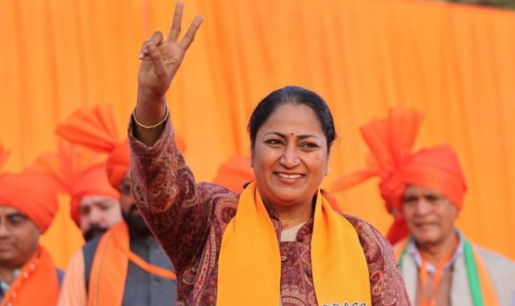
In a significant boost to Delhi’s healthcare infrastructure, Chief Minister Rekha Gupta will inaugurate 33 Ayushman Arogya Mandirs on Saturday, marking the official rollout of the Ayushman Bharat – Pradhan Mantri Jan Aarogya Yojana (AB-PMJAY) in the national capital. The flagship healthcare scheme was launched by Prime Minister Narendra Modi in 2018. The heathcare programme is now being implemented in Delhi for the first time after the BJP formed the state government in 2024.
After 27 years, the Bharatiya Janata Party formed the government in Delhi after defeating the ruling Aam Aadmi Party (AAP) by a comfortable margin.The BJP won 47 seats in the 70-member legislative assembly, while the AAP could secure only 23 seats.
The scheme is designed to provide accessible, affordable, and comprehensive healthcare to the common man. Today’s inauguration is seen as a landmark moment, aligning Delhi with the rest of the country under what is considered the world’s largest government-funded health program, targeting over 50 crore beneficiaries across India.
Chief Minister Gupta will personally inaugurate one of the 33 centres and unveil six more virtually. The remaining centres will be inaugurated physically by members of her Cabinet, each assigned to their respective constituencies. Alongside this, Gupta will also open 15 new Pradhan Mantri Jan Aushadhi Kendras at government hospitals, ensuring that affordable, high-quality generic medicines become more accessible to the public.
The six Cabinet ministers attending the physical inaugurations are Health Minister Pankaj Kumar Singh, Public Works Department Minister Parvesh Verma, Environment Minister Manjinder Singh Sirsa, Home and Education Minister Ashish Sood, Social Welfare Minister Ravinder Indraj Singh, and Culture and Arts Minister Kapil Mishra.
These newly-established centres aim to provide a broad spectrum of healthcare services, including preventive, promotive, curative, rehabilitative and palliative care.
According to the Delhi Health Department, all 33 Ayushman Arogya Mandirs—comprising 29 primary health centres and four sub-centres—are already operational. These are being managed by a range of government agencies, including the Municipal Corporation of Delhi (MCD), New Delhi Municipal Council (NDMC), Delhi Development Authority (DDA), and the Delhi Health Department.
Of these, 255 new permanent health centres will replace existing Mohalla Clinics that are currently run from temporary set-ups. Equipment and medicines from the existing clinics will be transferred to the new centres.
The remaining identified sites include 655 locations owned by various government departments and public sector undertakings, 47 previously existing sub-centres managed by municipal bodies, and seven already functional sub-centres that will be upgraded in the first phase of the rollout.
The services of the Ayushman Arogya Mandirs are equipped to offer a broader spectrum of care. There is also a special focus on cancer screening, immunisation, and family planning support.
Though some infrastructure upgrades—such as the installation of NAAT (nucleic acid amplification test) machines for tuberculosis testing—are still in progress, TB screening is already underway through alternate methods. Notably, Delhi has chosen to staff these centres with MBBS doctors, instead of community health officers as done in some other states, to ensure higher quality clinical care.
The health centres have been developed in accordance with the Indian Public Health Standards (IPHS) 2022, which specify strict guidelines for infrastructure, staffing, diagnostics, and essential medicine availability, particularly in urban areas. The rollout is part of a larger health infrastructure plan under which the Delhi government has identified 964 sites for future Ayushman Arogya Mandirs. Over the next nine months, 255 new permanent health centres will replace temporary Mohalla Clinics. Equipment and resources from the existing clinics will be transferred to these upgraded facilities.
The rest of the planned centres will be developed on government-owned land, including sites managed by public sector undertakings and municipal bodies. Some of the centres that are already functional will also be upgraded in the initial phase of this expansion.
Alongside these developments, the opening of Jan Aushadhi Kendras at 15 government hospitals will help ease the financial burden on patients. These pharmacies will offer generic medicines at prices far lower than their branded counterparts, addressing a major concern about out-of-pocket medical expenses.
The introduction of Ayushman Bharat in Delhi has not been without political controversy. Prime Minister Modi had previously accused the former AAP-led Delhi government of blocking the scheme for political reasons, arguing that lakhs of people in Delhi were denied health coverage due to fears it might overshadow the AAP’s own healthcare initiatives.
However, officials later revealed that in 2018, the Delhi Health Department itself had recommended adopting Ayushman Bharat. The proposal was reportedly shelved at the time, allegedly because Kejriwal wanted the recognition for health reforms to remain with his administration.
Now, with the political landscape changed and the scheme finally launched, today’s inauguration symbolizes more than just the opening of healthcare centres—it marks a shift toward greater alignment with national health goals.