
The Indian Navy came within a hair’s breadth of launching a decisive strike on Pakistan during Operation Sindoor, a move that could have drastically escalated the military confrontation following the Pahalgam terror attack. With target packages assigned and both warships and submarines primed for launch, the Indian Navy was moments away from unleashing a barrage of missile strikes on critical Pakistani naval and land assets. Had the green light been given, it would have spelled disaster for the Pakistani Navy, potentially crippling its core fleet in a single coordinated operation.
Assigned and Armed: Navy on High Alert
During the peak of Operation Sindoor, the Indian Navy was placed on hot-standby with clearly assigned targets, ready to strike at a moment’s notice. According to NDTV, Sources confirmed that Indian naval units were prepared to launch BrahMos cruise missiles at Pakistani naval vessels docked at Karachi harbour, as well as submarine-launched Klub-class land-attack missiles integrated with Kilo-class submarines. The Navy’s strike list included Pakistan Navy frigates, corvettes, and submarines in port, along with selected land-based installations.
Though the order to strike never came, Indian platforms were in optimal strike position. “Both warships and submarines were in position to launch anti-ship and land attack missiles,” a source revealed NDTV
Dominance at Sea: INS Vikrant Takes Control
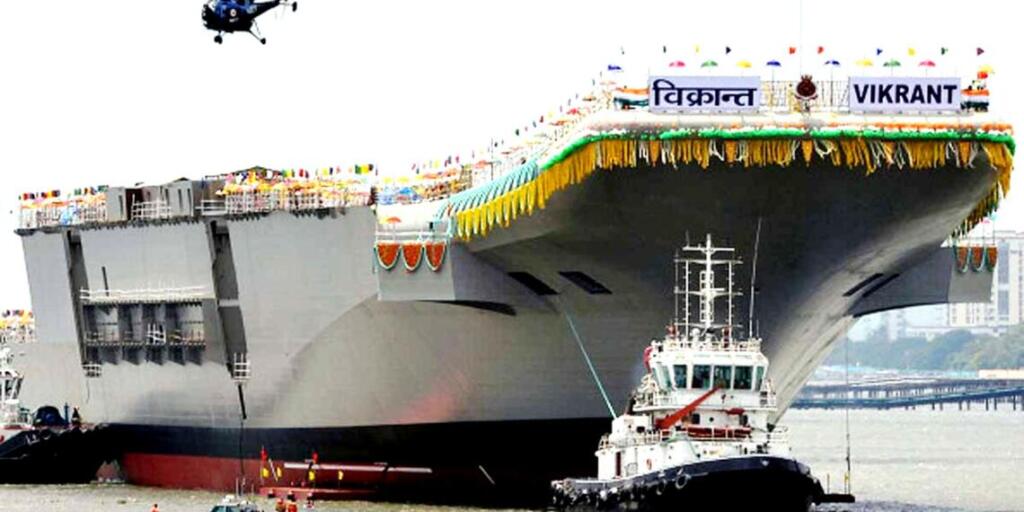
Throughout the period of hostilities, India exerted absolute dominance over the North Arabian Sea. At the heart of this naval superiority was the INS Vikrant Carrier Battle Group, backed by a wing of MiG-29K fighter jets. This formidable presence rendered Pakistan’s southern coastline airspace virtually inaccessible to its own air force.
Even after hostilities de-escalated, the Indian Navy remained vigilant. A Pakistan Navy RAS-72 Sea Eagle maritime patrol aircraft that attempted to venture out was intercepted by a MiG-29K. The Indian jet, launched from INS Vikrant, shadowed the Sea Eagle within a few hundred metres compelling it to retreat.
Pak Navy Bottled-Up and Vulnerable
Despite the high alert status, the Pakistani Navy never ventured out during the peak of the standoff. All frontline vessels, including their frigates and corvettes, remained docked in harbour. According to sources, if India had initiated its strike, many of these assets could have been sunk before even leaving port.
It has also learned that even though naval missiles weren’t launched from sea platforms, the Navy did contribute to the offensive through land-based systems. These were deployed to strike specific terror bases inside Pakistani territory. The nature and specifications of these systems remain classified.
Operation Sindoor: The Larger Context
Operation Sindoor was India’s response to the brutal April 22, 2025, Pahalgam terrorist attack in which 26 civilians lost their lives. Conducted between May 6-7, the operation saw coordinated air and missile strikes targeting at least nine terrorist infrastructure sites within Pakistan.
The Navy’s readiness during this period was a critical component of India’s broader military posture. Though it didn’t escalate to full-scale naval warfare, the message was unambiguous India’s naval might is not just for deterrence, it’s fully capable of delivering a knockout punch.
A Strike That Almost Was
While Operation Sindoor may be remembered for its precision airstrikes and tactical messaging, the role of the Indian Navy remains one of its most powerful untold stories. Fully loaded, strategically positioned, and poised for impact, the Navy’s restraint was matched only by its readiness. Had the final command come through, it wouldn’t just have rattled Karachi it could have rewritten the rules of naval engagement in the region. For Pakistan, the absence of that strike may have been fortune’s favour. For India, it was calibrated control with catastrophic potential in reserve.