












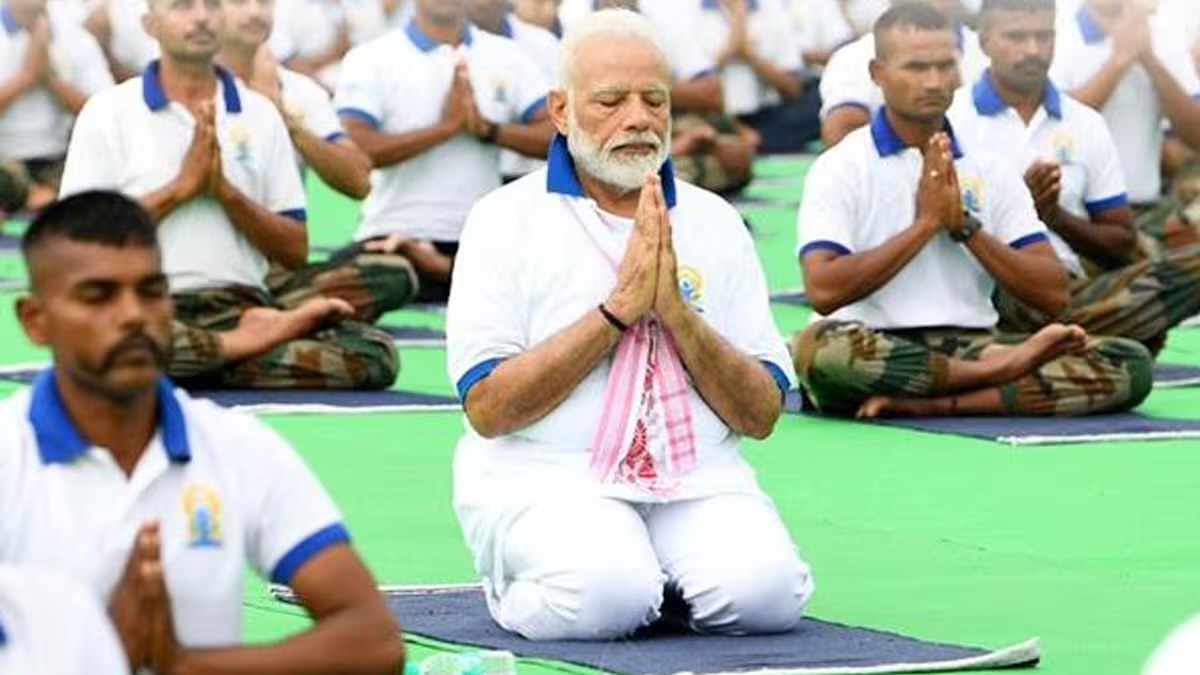
June 21 marked the 11th International Day of Yoga, and Prime Minister Narendra Modi extended his greetings to people across the globe. In his message, he emphasized that yoga has become a unifying force, promoting peace, wellness, and balance in daily life.
“Yoga has brought the world together. It promotes peace, wellness, and a balanced way of life,” the Prime Minister said.
He said that yoga means “to unite,” and it’s heartening to see how yoga has brought the entire world together.
PM Modi added that at a time when unrest, stress, and instability are increasing globally, yoga shows the path to peace. He described it as being like a “pause button.”
Joining the Prime Minister were Andhra Pradesh Chief Minister Chandrababu Naidu and Deputy Chief Minister Pawan Kalyan, who also participated in the yoga session. This year’s theme for Yoga Day is “Yoga for One Earth, One Health.”
According to the Indian Council for Cultural Relations (ICCR), over 2,000 yoga events were held at 1,300 locations in 191 countries.
The Bigger Picture: What is International Yoga Day?
International Yoga Day was officially declared by the United Nations in 2014, following a proposal by PM Modi. The aim was to share India’s ancient wellness tradition with the world. June 21—the summer solstice and the longest day of the year—was chosen for its significance in many cultures and yogic traditions.
Since then, Yoga Day has grown into a global event. Every year, millions of people from different countries take part in yoga sessions and health awareness programs, embracing the practice for physical and mental well-being.
Theme for 2025: “Yoga for One Earth, One Health”
The theme for this year’s celebration was “Yoga for One Earth, One Health.” It reflects the idea that individual well-being is closely connected to the health of the environment and the broader world. A healthy life, the theme suggests, involves harmony not just within ourselves, but with nature and society as a whole.
The main national event was held in Visakhapatnam, Andhra Pradesh, where Prime Minister Modi led a large gathering on RK Beach. More than three lakh people participated in the event there, and over two crore people across India joined in yoga sessions at more than one lakh locations.
“Yoga for Humanity 2.0” – A New Global Vision
In his address, the Prime Minister also launched a new initiative called “Yoga for Humanity 2.0.” His message encouraged people and governments around the world to adopt yoga not just as a fitness activity, but as a guiding philosophy for dealing with life’s challenges.
He suggested that the values yoga teaches—inner peace, discipline, and mindfulness—could even help shape more thoughtful and compassionate public policies.
Celebrating Yoga in Cultural and Historic Spaces
Yoga sessions this year were held at culturally significant locations, including a large event at the Red Fort in Delhi. These efforts aimed to blend India’s rich heritage with a growing movement for wellness and sustainable living.
To manage events across the country, thousands of yoga instructors, volunteers, and health workers were mobilized. In Visakhapatnam alone, over 3.5 lakh participants were supported by extensive coordination teams including medical staff, security, and sanitation workers.
Yoga: A Gift Beyond Borders
Leaders from across India echoed the idea that yoga has gone beyond national, cultural, and religious boundaries. In Arunachal Pradesh, Governor KT Parnaik described yoga as a timeless gift that continues to bring people together.
Yoga sessions were even held in monasteries and remote areas, showing how deeply yoga has been embraced by people from all walks of life.
This year’s International Yoga Day wasn’t just about practicing yoga—it was a reflection of how a centuries-old tradition continues to offer answers to modern challenges, connecting individuals and communities around the world.





