
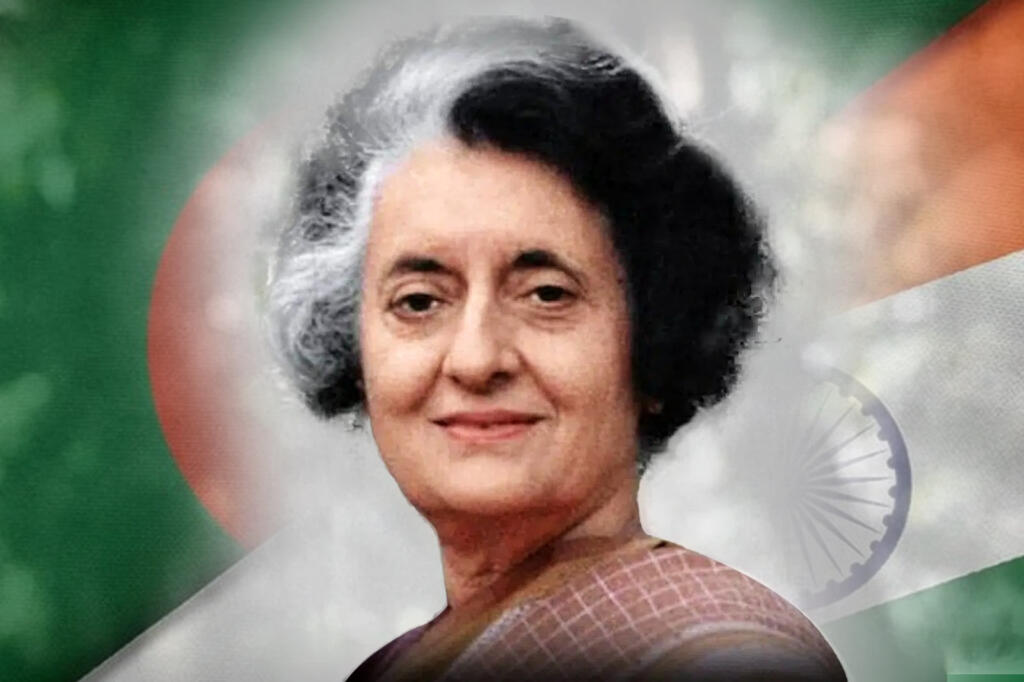
The Indira Gandhi National Centre for the Arts (IGNCA) ironically named after the very leader who dismantled democracy in 1975 is set to unveil a year-long programme marking the 50th anniversary of the Emergency. It was then Prime Minister Indira Gandhi who imposed the draconian measure, suspending fundamental rights, jailing opposition leaders, silencing the press, and unleashing one of the most oppressive regimes in independent India’s history.
The initiative seeks to shed light on what is undeniably one of the darkest and most shameful chapters in Indian democracy. It aims to educate the younger generation about the brutal curtailment of civil liberties, the abuse of state machinery for personal power, and the remarkable resilience of citizens who resisted an authoritarian clampdown orchestrated by the very person after whom the institution is named.
Indira’s Iron Grip
The Emergency, imposed by then Prime Minister Indira Gandhi on June 25, 1975, was nothing short of a constitutional coup a blatant assault on democracy cloaked in legality. Under the pretext of “internal disturbance,” Gandhi suspended civil liberties, censored the press, dissolved political opposition, and jailed thousands, including journalists, activists, and opposition leaders. For 21 months, India was transformed into an autocracy where the Prime Minister ruled unchecked, all to protect her grip on power after her election was declared invalid by the courts. Far from being a response to national crisis, the Emergency was a calculated move to silence dissent and crush democratic institutions a dark period that stands as a warning of how easily freedom can be sacrificed at the altar of political ambition.
The commemorative programme will officially begin on June 26 with a large-scale exhibition at the Ambedkar International Centre in New Delhi. This flagship event will showcase rare archival material, including original documents, photographs, newspaper clippings, and first-person narratives from those who lived through the Emergency. According to officials, the exhibit will also include excerpts from prison memoirs, underground literature, and rare publications banned during the period. The goal is to present a comprehensive picture of the widespread censorship, mass arrests, and suppression of political dissent that marked the 21-month period from June 25, 1975, to March 21, 1977.
In addition to the main exhibition, the IGNCA has planned mobile display units that will travel across the national capital, making the history accessible to school and college students, civil society members, and the general public. The broader series of events will include panel discussions, film screenings, public lectures, and digital campaigns, all aimed at revisiting the impact of the Emergency and the courage of those who stood up against authoritarianism.
The launch of this commemorative campaign has sparked strong political reactions. On Tuesday, Union Home Minister Amit Shah delivered a scathing critique of the Congress party’s role in imposing the Emergency. Speaking at a separate event, Shah called the decision a “deliberate and calculated attempt” by then Prime Minister Indira Gandhi to dismantle India’s democratic institutions and impose authoritarian rule.
“June 25, 1975, was the day democracy was murdered in India. It wasn’t just a political misstep; it was an attack on the soul of our Constitution. Indira Gandhi declared an Emergency not in the national interest, but to hold on to power after her election was invalidated,” Shah said. He further accused allied parties such as the DMK and certain socialist factions of standing with the Congress during that period, stating that they “compromised their principles to support a party that trampled on democratic values.”
The Home Minister’s remarks reflect the BJP-led government’s ongoing efforts to remind the public of the excesses committed during the Emergency, as part of a broader political narrative that positions the Congress as a party historically willing to compromise democratic norms.
With the 50th anniversary reigniting debate over constitutional rights, political accountability, and the importance of democratic institutions, the IGNCA’s programme is expected to play a central role in shaping public discourse over the coming year.