






















The Assam government has ramped up efforts to protect and reclaim vast areas of land that hold significant cultural, religious, and economic value for the state. These lands, known as Satra lands, were historically donated by kings and local Hindus to Satras, or Vaishnavite monasteries, to support their spiritual, economic, and cultural activities. Over the years, these lands have become a crucial source of income for the monks and have played a vital role in preserving Assamese traditions. However, encroachment on these lands has become a growing problem.
The Cultural Importance of Satras
Satras are integral to Assam’s cultural identity, particularly for the Vaishnavite community. These institutions, founded by saint-scholar Srimanta Sankardeva, have served as centers of religious worship, traditional performing arts, and community activities. The first Satra was established in Assam’s Majuli, and today there are over 900 Satras spread across the state, including popular ones like Auniati, Kamalabari, Garamur, Bengenaati, and Samaguri.
The Satras are not just places of worship but are essential for propagating socio-cultural ideals and ethics. They have contributed immensely to Assam’s spiritual and cultural heritage, offering a platform for traditional performances like bhaona and facilitating interactions with artisans who preserve ancient craftsmanship.
Encroachment Crisis: A Growing Threat
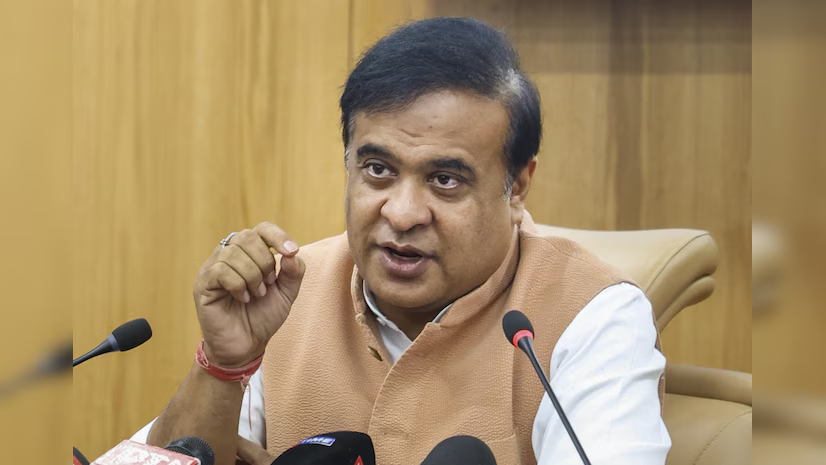
Unfortunately, over time, many of these sacred lands have been illegally occupied. According to Chief Minister Himanta Biswa Sarma, over 15,288.52 bighas of Satra lands across 29 districts of Assam are currently under illegal occupation. Districts such as Majuli, Bongaigaon, Dibrugarh, Nagaon, and Kamrup have reported significant encroachment, severely threatening the cultural fabric of the region.
CM Sarma tweeted about the scale of the issue, saying, “An area twice the size of our capital Dispur has been encroached upon! This is a direct assault on Assam’s culture and identity.” The illegal occupation of these lands is seen as an attack on the Assamese heritage, and the government is determined to address it.
Government Measures to Reclaim Satra Lands
To tackle this crisis, the Assam government has initiated several measures aimed at protecting and reclaiming Satra lands. In November 2021, the state formed the Commission for Review and Assessment of Problems of Satra Lands in Assam (CRAPSLA). This high-level committee was tasked with studying the extent of encroachment and finding solutions to the problem. Following the release of the interim report in December 2022, the government took swift action and successfully reclaimed 1,000 bighas of encroached land near the birthplace of Srimanta Sankardeva in Batadraba Than, Nagaon district.
Additionally, in February 2023, the government reclaimed 55 bighas of land near Gopal Ata Satra, and in July 2024, another 34 bighas of encroached land were restored to the Satras. The government also enacted the Assam Land and Revenue Regulation (Second Amendment) Bill in August 2024, which restricts outsiders from purchasing land within a 5-km radius of heritage institutions older than 250 years, such as Batadrawa Than, Barpeta Satra, and Majuli Island. These areas have now been categorized as “Heritage Blocks”.
Zoning and Financial Support for Satras
In October 2024, the Assam government launched Mission Basundhara 3.0, which includes protective zoning measures and facilitates land distribution to Satras, aiming to formalize legal ownership and protect the institutions from further encroachment. The government has also pledged financial support to help Satras maintain and modernize their operations.
On Twitter, CM Sarma commented on the cultural significance of these actions, saying, “When cow meat is consumed near a Satra, and the sound of Azaan overlaps with the Namghar of the Satra, it becomes a non-negotiable point. Such activities can take place 10 kilometers away, but not near Satras.” This reflects the broader concern that the illegal encroachment of Satra lands also involves cultural conflicts, which the government aims to resolve by strengthening land laws and creating protective zones around these sacred institutions.
Political Implications and Future Plans
The issue of Satra land encroachment has been a political hot topic in Assam for years. While the BJP government has made significant strides in reclaiming these lands, the issue was largely ignored during the Congress regime, which dismissed concerns about encroachment as a conspiracy theory. The BJP has since been on a mission to restore these indigenous lands to their rightful purpose, with the latest developments marking an intensification of efforts.
In the coming months, the Assam government plans to introduce a law in either the September or February legislative session to institutionalize the Permanent Satra Aayog, which will have administrative autonomy, judicial authority, and financial grants to support Satra functions in the state. This commission will work on a 25-year vision document to safeguard and modernize the Satras, ensuring their preservation for generations to come.
The ongoing efforts underscore the government’s determination to protect Assam’s cultural heritage from illegal encroachment and external threats, preserving the Satras as vital institutions for religious and cultural propagation in the state.





