

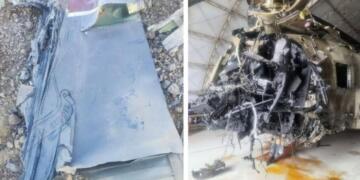















India is considering sending the severely damaged flight data recorder, ‘black box, from the Air India Boeing 787-8 Dreamliner that crashed in Ahmedabad on June 12 to the United States for advanced data recovery, sources revealed. The final decision will be made by the Indian government.
The ‘black box’ includes two critical components: the Cockpit Voice Recorder (CVR) and the Flight Data Recorder (FDR). Officials say the devices may be transported to the U.S. National Transportation Safety Board (NTSB) lab in Washington, D.C., for forensic analysis. A delegation of Indian aviation experts is expected to accompany the equipment to oversee the procedures and ensure all protocols are strictly followed.
While AAIB had established a laboratory at its headquarters in Delhi last year, it is yet to be properly equipped to extract data from recorders which have sustained heavy damage.
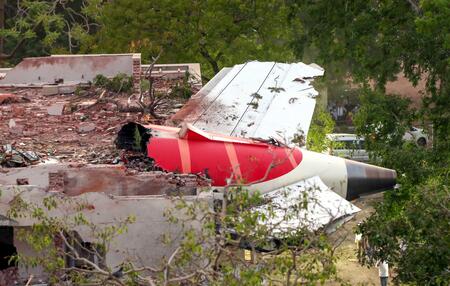
Flight AI171 was bound for London’s Gatwick Airport when it went down shortly after takeoff from Sardar Vallabhbhai Patel International Airport. The aircraft crashed into a medical college hostel in Ahmedabad’s Meghani Nagar area at approximately 1:40 pm, igniting a large fire. Of the 242 passengers and crew members on board, only one person survived.
The black box was located 28 hours after the crash. Though commonly known as a “black box,” these recorders are painted bright orange to make them easier to spot amid wreckage.
The crash occurred just minutes after take-off from Ahmedabad airport when the aircraft lost altitude and spiralled into a medical college hostel located in a densely populated residential area.
The Cockpit Voice Recorder records in-flight audio from the cockpit, including conversations, radio transmissions, engine sounds, and system warnings. Since this aircraft was delivered in 2014—prior to the rule requiring 25-hour voice recording capacity introduced in 2021—it likely retains only the last two hours of cockpit audio.
The Flight Data Recorder collects detailed information on flight performance, such as speed, altitude, direction, vertical motion, and control surface movements. In aircraft like the Boeing 787-8, these devices can log thousands of data points and typically cover more than 25 hours of flight activity.
Investigators are now working meticulously to reconstruct the final seconds of the Air India flight in an effort to pinpoint the exact cause of the crash. The Cockpit Voice Recorder (CVR) is expected to confirm a distress call reportedly received by Ahmedabad Air Traffic Control moments before the incident. According to preliminary details from the Ministry of Civil Aviation, Captain Sumeet Sabharwal had issued a “Mayday” alert.
Only One Survivor
In a miraculous twist, 27-year-old Vishwash Kumar Ramesh, a British citizen traveling to the UK for work, was the only passenger to survive. He sustained serious injuries but is now stable. His survival has brought a glimmer of hope in an otherwise tragic event and may also aid investigators as they try to reconstruct the crash sequence.
DNA Testing and Identification
Due to the severity of the impact and fire, many of the bodies were badly burned or fragmented, making visual identification impossible. Forensic teams have been working around the clock using DNA profiling to match remains with samples provided by relatives. As of today, 144 of the 279 victims have been positively identified. Authorities are continuing the process and have promised to expedite the return of remains to families.
Investigation and Safety Concerns
A multi-agency investigation is underway, involving India’s Aircraft Accident Investigation Bureau (AAIB), Boeing, and aviation experts from the United Kingdom and United States. The aircraft’s black boxes have been recovered and sent for analysis. Preliminary data suggest that a sudden electrical failure or engine malfunction could be behind the rapid descent.
Maintenance records of the aircraft, which was 9 years old and had undergone a routine check a month prior, are also under review. Officials have not ruled out technical faults or possible human error but stress that it is too early to draw conclusions.
Public Response and Airline Action
The tragedy has sparked a nationwide debate on aviation safety. Questions are being raised about the condition of the aircraft, the adequacy of emergency training, and infrastructure around urban airports. In response, Air India has grounded a number of its Dreamliner jets for precautionary checks and announced compensation packages for the victims’ families.
In a statement, the airline expressed “deep sorrow” over the incident and assured the public of full cooperation with investigative authorities.
Ongoing Recovery and Support
Emergency crews are still combing through the debris at the crash site. Psychological counselors and trauma specialists have been deployed to assist survivors, families, and first responders. The Gujarat state government has set up a dedicated helpdesk and is coordinating with embassies to support international victims’ families.
As the nation mourns, efforts continue to uncover what caused this devastating tragedy and to ensure accountability for the loss of so many lives.





