
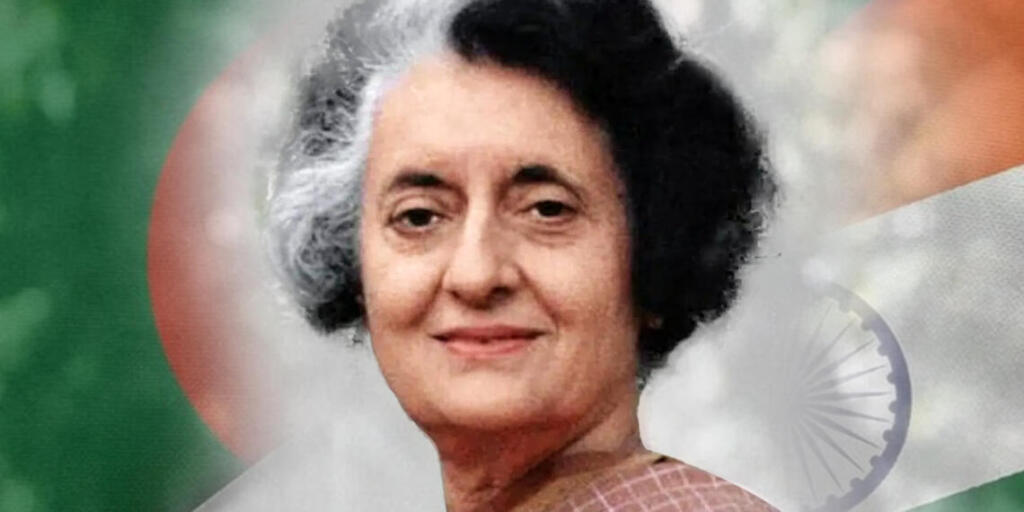
On June 25, 1975, India entered one of the most controversial and authoritarian periods in its democratic history—the Emergency imposed by Prime Minister Indira Gandhi.
Lasting 21 months, from 1975 to 1977, the Emergency saw the suspension of civil liberties, widespread censorship of the press, mass arrests of opposition leaders, and rule by executive decree. It marked a turning point in Indian politics, transforming the way citizens, courts, and media perceived power and accountability.
Now, as India observes 50 years since the Emergency, it is crucial to revisit how it unfolded—especially the mechanisms through which press freedom was muzzled, constitutional rights were suspended, and a vibrant democracy was brought to a standstill.
On June 25, 1975, India entered a period of constitutional crisis that would last for 21 months—commonly referred to as “The Emergency.” Declared by Prime Minister Indira Gandhi, this extraordinary phase marked the suspension of civil liberties, clampdown on the press, mass incarcerations, and governance by executive fiat. As India marks 50 years since that critical juncture, the legacy of the Emergency continues to shape the nation’s understanding of democracy and state power.
The Emergency was imposed under Article 352 of the Constitution, which allowed the President—on the advice of the Prime Minister and Cabinet—to declare a national emergency if the country faced a threat from war, external aggression, or, as was claimed in 1975, internal disturbances. It was the first and only time an Emergency was declared on the grounds of internal unrest, a provision that was later removed from the Constitution by the 44th Amendment to prevent future misuse.
The decision to declare Emergency was not sudden. It followed a wave of public discontent, driven by economic hardship, rising unemployment, and widespread allegations of corruption. Protests in Gujarat and Bihar, particularly among students and youth groups, coalesced into a larger political movement under the leadership of Jayaprakash Narayan—a veteran of the freedom struggle. His call for “Total Revolution” or Sampoorna Kranti challenged the very foundations of Indira Gandhi’s authority.
The political crisis deepened when the Allahabad High Court, on June 12, 1975, found Indira Gandhi guilty of electoral malpractice and disqualified her from Parliament. Though the Supreme Court offered a partial stay, the verdict triggered a nationwide call for her resignation. Faced with growing public agitation and a crumbling political image, Indira Gandhi responded by imposing an Emergency.
The declaration was signed by President Fakhruddin Ali Ahmed on the night of June 25. Power supply to newspaper offices along Delhi’s press hub, Bahadur Shah Zafar Marg, was cut off to prevent the next day’s editions from going to print. The Cabinet was not informed until the following morning, and the country first heard of the Emergency through Gandhi’s address on All India Radio.
What followed was a systematic suppression of press freedom. A regime of pre-censorship was introduced, where all publications had to submit their content for approval before printing. This censorship extended not just to editorials and news reports but to cartoons, op-eds, and even advertisements. The Ministry of Information and Broadcasting, under V.C. Shukla, played a central role in enforcing these restrictions. Censors were placed in newsrooms, and content deemed critical of the government was either heavily redacted or blocked altogether.
Independent news agencies were forced to merge into a state-controlled agency named Samachar, which ensured that all media platforms reported only the government’s version of events. Doordarshan and All India Radio, the two state broadcasters, functioned solely as tools of state propaganda. Meanwhile, the Press Council of India was dissolved, and dissenting voices were systematically silenced.
Journalists who resisted this repression faced harsh consequences. Over 250 media professionals, including renowned editor Kuldip Nayar, were jailed under the Maintenance of Internal Security Act (MISA). One of the most iconic protests came from The Indian Express, which published a blank editorial on June 27, symbolizing the vacuum left by censorship. Its proprietor, Ramnath Goenka, emerged as a key figure in media resistance during this time.
The Emergency also saw large-scale arrests of political opponents. Key opposition leaders such as Jayaprakash Narayan, Morarji Desai, Atal Bihari Vajpayee, George Fernandes, and L.K. Advani were detained. In total, over 36,000 individuals were imprisoned, and constitutional amendments were hurriedly passed to strip courts of the power to review Emergency proclamations or detentions.
Among the most controversial of these were the 38th, 39th, and 42nd Amendments, which curtailed judicial oversight, strengthened central authority, and limited the scope of fundamental rights. In the ADM Jabalpur vs Shivkant Shukla case, the Supreme Court ruled that the right to legal remedy could be suspended during an Emergency—a verdict that was widely criticized and later reversed by the 44th Amendment.
Meanwhile, Indira Gandhi’s son, Sanjay Gandhi, exercised increasing influence. He launched a “Five-Point Programme” that included forced sterilizations and aggressive slum clearance drives. The infamous Turkman Gate incident in Delhi saw police firing on residents protesting demolition, while in Muzaffarnagar, Uttar Pradesh, a protest against sterilization led to dozens of deaths.
Despite the authoritarian grip, in early 1977, Indira Gandhi surprised many by announcing general elections. Possible reasons ranged from overconfidence based on intelligence reports to a desire to restore democratic legitimacy. However, the public response was decisive. In the general election held in March 1977, the Congress party suffered a historic defeat. The newly formed Janata Party, a coalition of anti-Congress forces, came to power with Morarji Desai as Prime Minister.
The new government quickly moved to undo many of the Emergency’s excesses. The 44th Constitutional Amendment restored checks and balances by making Emergency declarations subject to judicial review and requiring special majority approval from both Houses of Parliament. It also removed “internal disturbance” as grounds for an Emergency, leaving only war, external aggression, or armed rebellion as valid justifications. The Shah Commission, set up to investigate the misuse of power during the Emergency, found widespread abuse of authority, violation of rights, and centralized decision-making without due process.
Politically, the Emergency left a lasting imprint. It marked the rise of a new generation of leaders like Lalu Prasad Yadav, George Fernandes, Arun Jaitley, and Ram Vilas Paswan, many of whom would go on to shape India’s political future. It also altered the dynamics of Indian politics by strengthening the role of backward classes and reinforcing federal values. The experience made Indians more vigilant about civil liberties, and any signs of authoritarianism are still viewed through the lens of Emergency-era excesses.
The period also severely damaged the Congress’s legacy as a party of freedom and democracy. While the Janata experiment did not last long, and the Congress returned to power in 1980, the Emergency cast a long shadow. Even decades later, political opponents cite it as a cautionary tale. Allegations of authoritarianism are often labeled as manifestations of an “Emergency mindset.”
The Emergency was a test of Indian democracy—and while the system ultimately reasserted itself through the ballot box, the period remains a powerful reminder of how fragile democratic freedoms can be when institutions are undermined and a free press is silenced.
Here’s a look at 10 key leaders who braved the hardships and emerged strong from the Emergency period:
1. Jayaprakash Narayan
Popularly known as ‘Lok Nayak’ (the people’s hero), Jayaprakash Narayan called for Sampoorna Kranti, a total revolution, in the political system after the High Court found Indira Gandhi guilty of electoral malpractices. He never contested an election but received tremendous support from the people when he led the fight against the Emergency. A major highlight was the Ramlila Ground rally in the national capital that shook Ms Gandhi.
2. Morarji Desai
In the aftermath of the Emergency, the Janata Party came to power during the 1977 elections. As Mr Desai became the next Prime Minister, he reportedly overturned a slew of directives issued by Ms Gandhi, further bringing in major constitutional amendments to make it harder for Emergency to be declared in future again.
3. Atal Bihari Vajpayee
Most of the Opposition leaders were jailed during the Emergency. Among them was Atal Bihari Vajpayee, who was imprisoned for several months. During this time, he criticised Ms Gandhi’s decision to impose Emergency through his poems. In the Janata Party government, Mr Vajpayee, who would later become the country’s Prime Minister, served as the Foreign Minister of India.
4. LK Advani
One of the co-founders of the Bharatiya Janata Party (BJP), LK Advani was also among those imprisoned during the Emergency. Addressing the atmosphere of fear during the time, Advani’s words on how media operated are etched in memory. “When asked to bend, they chose to crawl,” he had famously remarked. Mr Advani would later serve as India’s Deputy Prime Minister.
5. George Fernandes
Stories of George Fernandes disguising himself as a local fisherman, a Sikh or even as a Sadhu to evade arrests during the Emergency period are known by one and all. He travelled extensively, receiving major support for resistance against Ms Gandhi’s rule. Though he was eventually arrested, Mr Fernandes later contested the general elections from jail and won the Muzaffarpur seat in Bihar by a massive margin.
6. Lalu Prasad Yadav
At a young age, Lalu Prasad Yadav took part in the JP movement and went on to gain enough prominence to emerge as an important leader in the post-emergency era. He has served as the Chief Minister of Bihar and was also the Railway Minister during the Congress-led United Progressive Alliance era.
7. Mulayam Singh Yadav
Fondly known as ‘Netaji’ among party workers and followers, Mulayam Singh Yadav was also jailed during the Emergency period. Later, he went on to become one of the most prominent leaders of Uttar Pradesh and served as state Chief Minister thrice. After his demise in October 2022, Prime Minister Narendra Modi paid tribute to him, calling him a “key soldier for democracy during the Emergency.”
8. Sharad Yadav
A seven-term Lok Sabha and four-term Rajya Sabha member, Sharad Yadav is a former Union Minister. He was also among key leaders who opposed Ms Gandhi’s Emergency tooth and nail. He was first elected to the Lok Sabha in 1974 from Madhya Pradesh’s Jabalpur. Mr Yadav also played a crucial role in the implementation of the Mandal Commission recommendations.
9. Ram Vilas Paswan
Ram Vilas Paswan, who would later emerge as one of the key leaders in Bihar politics, was jailed during the 1975 Emergency. Two years later, during the 1977 General Elections, Mr Paswan registered a landslide victory in the Hajipur Lok Sabha seat.
10. Raj Narain
Remembered as the biggest critic of ex-PM Indira Gandhi, Raj Narain was also arrested and imprisoned during the Emergency period. After losing to Ms Gandhi in Uttar Pradesh’s Raebareli seat during the 1971 elections, Mr Narain challenged her election alleging electoral malpractices as well as violation of the Representation of the People Act, 1951. Post the Emergency, he went on to defeat Ms Gandhi from the same seat in the 1977 elections.